Panic disorder involves recurrent unexpected panic attacks, sudden surges of intense fear with physical symptoms, followed by persistent worry about future attacks or avoidance. It is treated with SSRIs or SNRIs and cognitive behavioral therapy that includes interoceptive exposure, with most people seeing major improvement within 12 weeks. Panic attacks are not medically dangerous. Stedfast Psychiatry treats panic disorder at 25 Clarks Summit Drive in Bluffton and by video across South Carolina; new patients call (561) 234-4547.
Panic Disorder at our Bluffton office
For panic disorder treatment, residents of Sun City Hilton Head, Hampton Lake, Palmetto Bluff and Rose Hill and Hardeeville, Ridgeland, Beaufort and Port Royal are usually within a short drive. The office is in the Sheridan Park business area off US-278 (Fording Island Road), the main road between I-95 and Hilton Head Island.
Call (561) 234-4547 to book, or request an appointment online and we will call you back. The office is open weekdays 8:00 AM to 5:00 PM. The office is in the Sheridan Park business area off US-278 (Fording Island Road), the main road between I-95 and Hilton Head Island. From I-95, take exit 8 for US-278 east toward Bluffton and Hilton Head and continue about twelve miles; turn into Sheridan Park and follow Clarks Summit Drive to the building.
Stedfast Psychiatry's Deep TMS and Spravato programs are open to South Carolina patients: the evaluation, screening scales and insurance authorization are done at the Bluffton office or by video, and treatment sessions are scheduled at our Florida treatment centers. Your Bluffton provider will tell you plainly whether a treatment course is practical for you.

Who you will see in Bluffton
The Bluffton team includes psychiatrist Dr. Josh Walters and physician assistant Amanda Skipworth. Children and teens are seen by Savanna Smallwood-Corcoran and Josh Walters.

Savanna Smallwood-Corcoran
Clinician · Ages 5 to 64
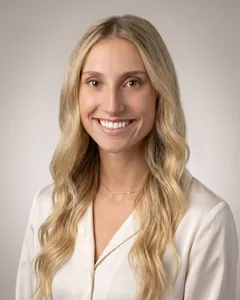
Amanda Skipworth, PA-C
Physician Assistant · All ages
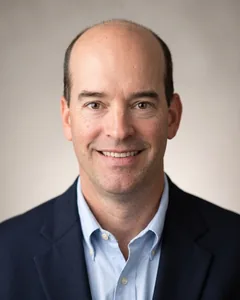
Dr. Josh Walters, MD
Psychiatrist · Adolescents through older adults
Signs of panic disorder
- Sudden episodes of intense fear peaking within minutes
- Pounding or racing heart, chest pain or tightness
- Shortness of breath or a choking feeling
- Dizziness, lightheadedness or feeling faint
- Sweating, trembling, chills or hot flashes
- Numbness or tingling in hands, face or lips
- Nausea or stomach distress
- Feeling detached from yourself or that things are unreal
How we diagnose it
A panic disorder evaluation at Stedfast Psychiatry includes a detailed description of your attacks (onset, peak, duration, symptoms, triggers), what you fear during them, how you have changed your life to avoid them, and whether agoraphobia has developed. We use the Panic Disorder Severity Scale, the GAD-7 and the PHQ-9 to measure baseline and progress. We review your caffeine, alcohol, cannabis and medication use, and your medical history. If you have not already had a medical workup, we coordinate with your primary care provider on an EKG, thyroid tests and a basic metabolic panel to rule out cardiac and endocrine causes. We also screen for depression, PTSD, social anxiety and substance use, which commonly accompany panic.
About 2.7 percent of US adults had panic disorder in the past year, and 4.7 percent will have it at some point in their lives.
Source: NIMH, National Comorbidity Survey Replication
Women are about twice as likely as men to develop panic disorder.
Source: NIMH
Cognitive behavioral therapy for panic disorder leads to panic-free status in roughly 70 to 80 percent of patients who complete treatment.
Source: American Psychological Association, Division 12 treatment review
Panic disorder patients account for a disproportionate share of emergency visits for chest pain; a large fraction of chest pain visits with normal cardiac findings involve panic.
Source: American Psychiatric Association Practice Guideline for Panic Disorder
Treatment for panic disorder in Bluffton
Medication management
SSRIs are first-line: sertraline, paroxetine and fluoxetine are FDA-approved for panic disorder, and escitalopram and the SNRI venlafaxine XR are well supported. People with panic are unusually sensitive to activation in the first days of an SSRI, so we start at half the usual dose or lower and increase slowly over four to six weeks. Attacks usually decrease in frequency by week four to six, with full benefit at 8 to 12 weeks. A benzodiazepine such as clonazepam may be used briefly as a bridge during the first few weeks or for rare severe attacks, but we avoid daily long-term use because of tolerance, dependence and interference with therapy. Propranolol can help with physical symptoms in performance situations. Medication is continued for at least 12 months after remission and tapered slowly.
Psychotherapy
CBT for panic disorder is highly effective, often in 8 to 12 sessions. It includes education about the fight-or-flight response, correcting catastrophic interpretations of body sensations, slow breathing retraining, and interoceptive exposure: deliberately producing the feared sensations (spinning, running in place, breathing through a straw) until the brain learns they are harmless. When agoraphobia has developed, graded exposure to avoided places follows. CBT produces results comparable to medication and has lower relapse rates after treatment ends. Many patients combine both.
What to expect
Your first visit is a 45 to 60 minute evaluation, in person or by video. You leave with a clear explanation of what is happening in your body during an attack, a plan, and a prescription if medication is appropriate. Follow-ups are every two to three weeks while the SSRI is being titrated, then monthly, then every two to three months. CBT sessions are weekly for two to three months. Telehealth works well for panic disorder, and for patients with agoraphobia it removes the barrier of leaving home to get help.
The complete guide, including causes, subtypes and research, is on our Panic Disorder page.
Emergency and crisis resources near Bluffton
In an emergency, call 911 or go to Coastal Carolina Hospital Emergency Department (1000 Medical Center Dr, Hardeeville). The 988 Suicide and Crisis Lifeline is available by call or text 24 hours a day. Hilton Head Hospital Emergency Department and 988 Suicide and Crisis Lifeline are also listed on the Bluffton office page.
Frequently asked questions
Who provides panic disorder treatment at the Bluffton office?
The Bluffton team includes psychiatrist Dr. Josh Walters and physician assistant Amanda Skipworth. Every provider works under psychiatrist oversight and the same evaluation standard: about an hour for a first visit, validated screening scales, and a written plan.
Can I be seen by video instead of coming to Bluffton?
Yes. Stedfast Psychiatry providers are licensed in South Carolina and offer video visits for evaluations and follow-ups. Some situations, including certain controlled-substance prescriptions and first visits for young children, require an in-person appointment at 25 Clarks Summit Drive.
Does the Bluffton office take my insurance?
We accept most major commercial plans and Medicare. Call (561) 234-4547 with your member ID and we will verify benefits before the visit. Self-pay new-patient evaluations are $185.
How soon can a new patient be seen in Bluffton?
Most new patients are scheduled within one to two weeks. If you need to be seen sooner, ask about a video visit; those often open up within days. If you are in crisis, call or text 988 or go to the nearest emergency room rather than waiting.
Can I get Deep TMS or Spravato as a Bluffton patient?
Yes. Stedfast Psychiatry is licensed for both. Your Bluffton provider does the evaluation and the prior authorization; treatment sessions are scheduled at our Palm Beach Gardens TMS center and the Palm Beach Gardens Spravato rooms.
Is a panic attack dangerous? Could it be a heart attack?
A panic attack is not dangerous, although it feels like it. The racing heart, chest tightness and shortness of breath are the normal fight-or-flight response firing at the wrong time. A first episode of chest pain deserves a medical evaluation, including an EKG, to rule out cardiac causes. Once that is normal, further attacks with the same pattern are panic, and treating the panic ends the cycle of ER visits.
What is the best medication for panic attacks?
SSRIs such as sertraline, paroxetine and escitalopram are first-line and prevent attacks over 8 to 12 weeks. Benzodiazepines stop an attack within 20 to 30 minutes but are not a good long-term solution because of dependence and because they prevent the brain from learning the attack is harmless. We often start a low SSRI dose and use a benzodiazepine only briefly as a bridge, if at all.
Nearby Stedfast offices
If you are in crisis, call or text 988 or go to the nearest emergency room. Educational content; individual results vary. Reviewed by Dr. David Husted, board-certified psychiatrist.