Postpartum depression is a depressive episode beginning in pregnancy or within a year of birth, affecting about one in eight mothers. It is treated with psychotherapy, antidepressants compatible with breastfeeding such as sertraline, and, for moderate to severe cases, zuranolone, the first oral medication FDA-approved specifically for postpartum depression. Most mothers improve within weeks of starting treatment. Stedfast Psychiatry treats postpartum depression and perinatal mood disorders at 25 Clarks Summit Drive in Bluffton and by video across South Carolina; new patients call (561) 234-4547.
Postpartum Depression and Perinatal Mood Disorders at our Bluffton office
The Bluffton office at 25 Clarks Summit Drive, Suite F201 serves Rose Hill, Belfair, Berkeley Hall, Colleton River and Hampton Hall and the surrounding communities of Hilton Head Island, Okatie, Hardeeville, Ridgeland and Beaufort. Old Town Bluffton and Calhoun Street is a useful landmark for first-time visitors.
Free surface parking is available at the building, with accessible spaces near the entrance. Suite F201 is on the second floor. If you need elevator access, call our office before your visit. Hours are Monday to Friday, 8:00 AM to 5:00 PM, with weekend appointments by arrangement. New patients call (561) 234-4547; existing patients use (854) 800-2740.
Stedfast Psychiatry's Deep TMS and Spravato programs are open to South Carolina patients: the evaluation, screening scales and insurance authorization are done at the Bluffton office or by video, and treatment sessions are scheduled at our Florida treatment centers. Your Bluffton provider will tell you plainly whether a treatment course is practical for you.

Who you will see in Bluffton
The Bluffton team includes psychiatrist Dr. Josh Walters and physician assistant Amanda Skipworth. Children and teens are seen by Savanna Smallwood-Corcoran and Josh Walters.

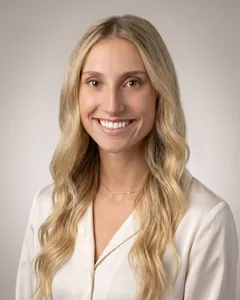
Savanna Smallwood-Corcoran
Clinician · Ages 5 to 64
Amanda Skipworth, PA-C
Physician Assistant · All ages

Dr. Josh Walters, MD
Psychiatrist · Adolescents through older adults
Signs of postpartum depression and perinatal mood disorders
- Persistent sadness, emptiness or crying lasting beyond two weeks after birth
- Feeling unable to bond with or enjoy your baby
- Intense anxiety, panic or constant worry about the baby's health
- Intrusive thoughts of harm coming to the baby that feel horrifying
- Inability to sleep even when the baby sleeps
- Loss of appetite or eating much more than usual
- Feeling like a failure as a mother or that your family would be better off without you
- Irritability, anger or withdrawal from your partner and friends
How we diagnose it
We evaluate perinatal mood disorders with a clinical interview and the Edinburgh Postnatal Depression Scale (EPDS), the standard screening tool, along with the GAD-7 and a review of obsessive thoughts, panic, trauma symptoms and sleep. We ask carefully about any history of bipolar disorder or hypomania, because the postpartum period is a high-risk time for a first manic episode and antidepressants alone can trigger one. We screen for postpartum psychosis (confusion, hallucinations, paranoia, rapid mood shifts), which requires emergency care. We check thyroid function (TSH), a complete blood count for anemia, and vitamin D and B12 when indicated. We ask about breastfeeding, your baby's health and your support at home, and with your permission we coordinate with your OB-GYN and your baby's pediatrician.
About one in eight women who give birth in the US report symptoms of postpartum depression.
Source: CDC, Pregnancy Risk Assessment Monitoring System
Perinatal depression affects up to 1 in 7 women during pregnancy or the first year after birth, and fewer than half are diagnosed.
Source: American College of Obstetricians and Gynecologists
Zuranolone was FDA-approved in August 2023 as the first oral treatment specifically for postpartum depression, taken once daily for 14 days.
Source: US Food and Drug Administration
Mental health conditions, including suicide and overdose, are the leading underlying cause of pregnancy-related deaths in the US.
Source: CDC Maternal Mortality Review Committees, 2017 to 2019 data
Treatment for postpartum depression and perinatal mood disorders in Bluffton
Medication management
SSRIs are first-line and most are compatible with breastfeeding. Sertraline has the most safety data and passes into breast milk in very low amounts; escitalopram, citalopram and paroxetine are also used, and if you took a medication successfully before pregnancy we usually prefer to resume it. Improvement begins in two to four weeks with full benefit at six to eight weeks, and treatment continues for at least six to twelve months. Zuranolone (Zurzuvae), FDA-approved in 2023, is the first oral medication specifically for postpartum depression: a 14-day course that produces improvement within days in clinical trials, with the trade-off that it causes drowsiness and you cannot drive for 12 hours after each dose. Brexanolone (Zulresso), a 60-hour IV infusion, is also FDA-approved for postpartum depression and given in a hospital setting. For postpartum anxiety and OCD, SSRIs at adequate doses work well. We monitor for sedation, feeding changes in the baby, and emerging hypomania.
Psychotherapy
Cognitive behavioral therapy and interpersonal therapy are both effective for postpartum depression and are a complete treatment for mild to moderate episodes. Interpersonal therapy addresses the role transition, relationship changes and isolation of new parenthood directly. For postpartum OCD, exposure and response prevention helps mothers stop avoiding their baby out of fear of intrusive thoughts. For birth trauma, trauma-focused therapy is used. Partners are welcome in sessions, and we connect families with postpartum support groups through Postpartum Support International.
Interventional options
For postpartum depression that has not responded to two or more antidepressants, Deep TMS is an option. Deep TMS is FDA-cleared for major depressive disorder and anxious depression, involves no medication, and is compatible with breastfeeding; a course is 36 sessions over six to nine weeks at our Palm Beach Gardens office. Spravato (esketamine) is FDA-approved for treatment-resistant depression and for MDD with suicidal ideation in adults 18 and older; it has not been studied in breastfeeding and is generally avoided in women who are nursing, but it may be considered for severe, treatment-resistant postpartum depression when breastfeeding has ended or the risks are weighed carefully. Severe postpartum depression with psychosis or inability to care for oneself may require hospital treatment, and we coordinate that when needed.
What to expect
Your first visit is a 60-minute evaluation that can be done by video from home, with your baby present if that is easiest. We take a full history, complete the EPDS, discuss medication safety for pregnancy or breastfeeding in detail, and agree on a plan that day. Follow-ups are at one to two weeks early on because the postpartum period moves quickly, then every two to four weeks. We offer in-person and telehealth care throughout Florida and South Carolina and coordinate with your OB-GYN and pediatrician with your consent.
The complete guide, including causes, subtypes and research, is on our Postpartum Depression and Perinatal Mood Disorders page.
Emergency and crisis resources near Bluffton
In an emergency, call 911 or go to Coastal Carolina Hospital Emergency Department (1000 Medical Center Dr, Hardeeville). The 988 Suicide and Crisis Lifeline is available by call or text 24 hours a day. Hilton Head Hospital Emergency Department and 988 Suicide and Crisis Lifeline are also listed on the Bluffton office page.
Frequently asked questions
Who provides postpartum depression and perinatal mood disorders treatment at the Bluffton office?
The Bluffton team includes psychiatrist Dr. Josh Walters and physician assistant Amanda Skipworth. Every provider works under psychiatrist oversight and the same evaluation standard: about an hour for a first visit, validated screening scales, and a written plan.
Can I be seen by video instead of coming to Bluffton?
Yes. Stedfast Psychiatry providers are licensed in South Carolina and offer video visits for evaluations and follow-ups. Some situations, including certain controlled-substance prescriptions and first visits for young children, require an in-person appointment at 25 Clarks Summit Drive.
Does the Bluffton office take my insurance?
We accept most major commercial plans and Medicare. Call (561) 234-4547 with your member ID and we will verify benefits before the visit. Self-pay new-patient evaluations are $185.
How soon can a new patient be seen in Bluffton?
Most new patients are scheduled within one to two weeks. If you need to be seen sooner, ask about a video visit; those often open up within days. If you are in crisis, call or text 988 or go to the nearest emergency room rather than waiting.
Can I get Deep TMS or Spravato as a Bluffton patient?
Yes. Stedfast Psychiatry is licensed for both. Your Bluffton provider does the evaluation and the prior authorization; treatment sessions are scheduled at our Palm Beach Gardens TMS center and the Palm Beach Gardens Spravato rooms.
How do I know if it is baby blues or postpartum depression?
Baby blues affect up to 80 percent of new mothers, start within days of birth, involve crying spells and mood swings, and resolve by two weeks without treatment. Postpartum depression lasts beyond two weeks, deepens rather than lifts, and includes hopelessness, inability to sleep when the baby sleeps, loss of interest in the baby or in anything, and sometimes thoughts of self-harm. If you are past two weeks and not improving, or if you feel worse, it is time for an evaluation.
Can I take antidepressants while breastfeeding?
Yes, in most cases. Sertraline is the best-studied and passes into breast milk in very small amounts with no established harm to infants. Escitalopram, citalopram and paroxetine are also considered compatible. We choose based on your history and the data, discuss it openly, and can coordinate with your pediatrician. Untreated postpartum depression carries its own risks for the baby's development, which is part of the balance.
Nearby Stedfast offices
If you are in crisis, call or text 988 or go to the nearest emergency room. Educational content; individual results vary. Reviewed by Dr. David Husted, board-certified psychiatrist.