Stedfast Psychiatry provides geriatric psychiatry for adults over 65 in our offices, by telehealth, and on-site at assisted living, independent living and skilled nursing facilities through the Stedfast Living program. We treat late-life depression and anxiety, behavioral symptoms of dementia, and review medication regimens for polypharmacy. Medicare and most major insurance plans are accepted. In Fort Lauderdale, this is available at 3107 Stirling Road and by video; new patients call (561) 437-2413.
Geriatric Psychiatry at our Fort Lauderdale office
For geriatric psychiatry, residents of Oakridge, Emerald Hills, Avon Park and Liberia and Dania Beach, Plantation, Pembroke Pines and Cooper City are usually within a short drive. The office is on Stirling Road west of I-95, in the stretch between Fort Lauderdale, Hollywood, and Davie, close to State Road 7 (US 441).
New-patient scheduling for Fort Lauderdale runs through (561) 437-2413. Existing patients reach the office directly at (561) 858-1951. Free surface parking is available in the lot in front of the building, with accessible spaces by the entrance. If a same-week in-person slot is not open, a video visit with the same provider usually is.
The Fort Lauderdale office is an entry point to Stedfast Psychiatry's Deep TMS and Spravato programs. Treatment sessions run at our Palm Beach Gardens TMS center and the Boynton Beach Spravato rooms, roughly 60 and 45 minutes away; the evaluation, the screening scales and the prior authorization all happen here.

Who you will see in Fort Lauderdale
The Fort Lauderdale team includes psychiatrist Dr. Sabina Goldstein, psychiatric nurse practitioners Ashley Toledo and Stefanie Sicre and physician assistants Rodrigo Zuniga, Hannah Parker and Daniela Contreras. Visits in Spanish are available with Rodrigo Zuniga, Ashley Toledo and Daniela Contreras. Children and teens are seen by Stefanie Sicre, Hannah Parker, Daniela Contreras and Sabina Goldstein.

Rod Zuniga, PA-C
Physician Assistant · Adults 18+ · English, Spanish

Ashley Toledo, PMHNP-BC
Psychiatric Nurse Practitioner · Ages 10 through older adults · English, Spanish
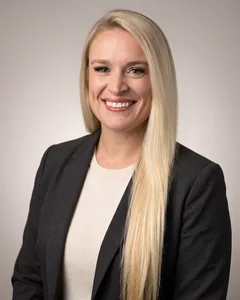
Stefanie Sicre, PMHNP-BC
Psychiatric Nurse Practitioner · Adults and teens 16+

Hannah Parker, PA-C
Physician Assistant · Adults and teens 15+

Daniela Contreras, PA-C
Physician Assistant · Adults and teens 16+; 15 on request · English, Spanish

Dr. Sabina Goldstein, MD
Psychiatrist · Adults and teens 15+
How geriatric psychiatry works
Evaluation of an older adult starts with the same structured interview we use for every patient and adds screening for cognitive impairment (MoCA or Mini-Cog), a careful medication reconciliation, review of recent labs and imaging, and collateral from family or facility staff. We look specifically for the medical causes that commonly masquerade as psychiatric illness in late life: thyroid disease, B12 deficiency, urinary tract infection, pain, hearing and vision loss, sleep apnea, and medications with anticholinergic or sedative effects. The Geriatric Depression Scale and the Cornell Scale for Depression in Dementia replace the PHQ-9 where appropriate.
Treatment is conservative by design. Antidepressants are started at half the usual dose and increased slowly. We avoid benzodiazepines and sedating antihistamines wherever possible because of fall and delirium risk. For behavioral symptoms of dementia, the first step is identifying triggers (pain, constipation, infection, overstimulation, unmet needs) and adjusting the environment and routine; medication is added only when non-drug approaches are insufficient and the symptom is causing distress or danger. When antipsychotics are used in dementia, we document the rationale, use the lowest effective dose, and plan gradual dose reduction in line with CMS requirements.
In facilities, our clinicians round on a regular schedule, review the chart and medication administration record, meet with the resident and nursing staff, and leave documentation that supports the facility's compliance obligations. Between rounds, telepsychiatry visits handle urgent changes. Families receive updates with the resident's or their representative's consent, and we coordinate with the attending physician and pharmacy consultant on every medication change.
Who it is for
Our geriatric services are for older adults with depression, anxiety, grief, sleep disturbance, psychosis, bipolar disorder, or the behavioral and psychological symptoms of dementia such as agitation, aggression, wandering, sundowning, paranoia and resistance to care. They are also for older adults on complicated medication regimens whose family or physician suspects that a psychiatric medication is causing confusion, falls or sedation rather than helping.
The Stedfast Living program is specifically for residents of assisted living facilities, independent living communities, memory care units and skilled nursing facilities who need ongoing psychiatric follow-up where they live. We work with facility nursing staff, the attending physician, and families. We also see community-dwelling older adults in any of our 13 offices or by video, including those cared for at home by a spouse or adult child who needs guidance on managing behavior and medication.
Depression affects an estimated 1 to 5 percent of community-dwelling older adults, but 13.5 percent of those receiving home health care and up to 11.5 percent of those hospitalized.
Source: CDC, Depression is Not a Normal Part of Growing Older
Up to 90 percent of people with dementia experience at least one behavioral or psychological symptom over the course of the illness.
Source: Alzheimer's Association; Cerejeira et al., Frontiers in Neurology, 2012
Men aged 75 and older have the highest suicide rate of any age group in the United States, at roughly 42 per 100,000.
Source: CDC WISQARS, 2021 data
Roughly 40 percent of adults over 65 take five or more prescription medications, the threshold commonly used to define polypharmacy.
Source: Lown Institute, Medication Overload report, 2019
What to expect at your first visit
For office or video visits, a new-patient geriatric evaluation runs 60 minutes and we strongly encourage a family member or caregiver to attend. Bring every medication bottle, including over-the-counter products and supplements, and any recent hospital discharge paperwork. Follow-ups are every two to four weeks while medications are being adjusted, then every one to three months. Many older patients find video visits easier than travel, and we offer them to anyone in Florida or South Carolina with a caregiver or facility staff available to help with the technology.
For facility residents, the facility or family contacts us to request a consultation. We obtain consent from the resident or their legal representative, review records, and schedule the first on-site visit, typically within one to two weeks and sooner for urgent behavioral concerns. After that, the resident is seen on our regular rounding schedule for that facility, with telepsychiatry in between as needed. Families can request a call after any visit.
Cost and insurance in Fort Lauderdale
Geriatric psychiatric evaluation, medication management and psychotherapy are covered by Medicare Part B as outpatient mental health services, including visits delivered in an assisted living facility or skilled nursing facility and visits by telehealth. After the Part B deductible, Medicare pays 80 percent and the patient or a supplemental plan pays 20 percent; Medicare Advantage plans apply their own copays. Most commercial plans are also accepted for patients under 65 or with employer coverage.
For skilled nursing residents in a Part A stay, psychiatric visits are billed separately under Part B by our practice, not by the facility. Facilities contract with Stedfast Living for the rounding service, and residents are not charged a facility fee by us. Self-pay rates are available; the new-patient visit is $185. Lab monitoring is billed by the laboratory.
Full details, risks and research are on the main Geriatric Psychiatry and the Stedfast Living Facility Program page.
Emergency and crisis resources near Fort Lauderdale
In an emergency, call 911 or go to Memorial Regional Hospital Emergency Department (3501 Johnson St, Hollywood). The 988 Suicide and Crisis Lifeline is available by call or text 24 hours a day. Broward Health Medical Center Emergency Department and 988 Suicide and Crisis Lifeline are also listed on the Fort Lauderdale office page.
Frequently asked questions
Who provides geriatric psychiatry at the Fort Lauderdale office?
The Fort Lauderdale team includes psychiatrist Dr. Sabina Goldstein, psychiatric nurse practitioners Ashley Toledo and Stefanie Sicre and physician assistants Rodrigo Zuniga, Hannah Parker and Daniela Contreras. Visits in Spanish are available with Rodrigo Zuniga, Ashley Toledo and Daniela Contreras. Every provider works under psychiatrist oversight and the same evaluation standard: about an hour for a first visit, validated screening scales, and a written plan.
Can I be seen by video instead of coming to Fort Lauderdale?
Yes. Stedfast Psychiatry providers are licensed in Florida and offer video visits for evaluations and follow-ups. Some situations, including certain controlled-substance prescriptions and first visits for young children, require an in-person appointment at 3107 Stirling Road.
Does the Fort Lauderdale office take my insurance?
We accept most major commercial plans and Medicare. Call (561) 437-2413 with your member ID and we will verify benefits before the visit. Self-pay new-patient evaluations are $185.
How soon can a new patient be seen in Fort Lauderdale?
Most new patients are scheduled within one to two weeks. If you need to be seen sooner, ask about a video visit; those often open up within days. If you are in crisis, call or text 988 or go to the nearest emergency room rather than waiting.
Can I get Deep TMS or Spravato as a Fort Lauderdale patient?
Yes. Stedfast Psychiatry is licensed for both. Your Fort Lauderdale provider does the evaluation and the prior authorization; treatment sessions are scheduled at our Palm Beach Gardens TMS center and the Boynton Beach Spravato rooms.
Is depression normal in old age?
No. It is common, but it is not a normal part of aging and it is treatable. Late-life depression often looks different: more physical complaints, more memory and concentration problems, less overt sadness. It is also frequently missed because patients and families attribute it to age or illness. Treatment improves mood, physical health outcomes and quality of life at any age.
Does Medicare cover geriatric psychiatry?
Yes. Medicare Part B covers psychiatric evaluation, medication management and psychotherapy as outpatient mental health services, including visits in assisted living and skilled nursing facilities and by telehealth. You pay the Part B deductible and 20 percent coinsurance unless a supplemental plan covers it. Medicare Advantage plans apply their own copays. We accept Medicare at all locations.
What is the Stedfast Living program?
It is our facility-based service. Stedfast clinicians round on a regular schedule at assisted living, independent living, memory care and skilled nursing facilities in Florida and South Carolina, seeing residents where they live, coordinating with nursing staff and attending physicians, and providing telepsychiatry coverage between visits. Facilities and families can both request a consultation.
Nearby Stedfast offices
If you are in crisis, call or text 988 or go to the nearest emergency room. Educational content; individual results vary. Reviewed by Dr. David Husted, board-certified psychiatrist.