Grief is a normal response to loss and usually does not require treatment. Prolonged grief disorder, where intense yearning and impairment persist beyond a year, affects about 7 to 10 percent of bereaved people and responds to grief-focused therapy. Grief that brings major depression, suicidal thoughts or PTSD symptoms warrants psychiatric evaluation, and antidepressants help when depression is present. Stedfast Psychiatry treats grief, loss and complicated grief at 3107 Stirling Road in Fort Lauderdale and by video across Florida; new patients call (561) 437-2413.
Grief, Loss and Complicated Grief at our Fort Lauderdale office
If you live near Fort Lauderdale-Hollywood International Airport or in Emerald Hills, Avon Park, Liberia and Hollywood Hills, this is your closest Stedfast Psychiatry office for grief, loss and complicated grief treatment. We also see residents of Davie, Dania Beach, Plantation and Pembroke Pines who prefer not to drive farther.
New-patient scheduling for Fort Lauderdale runs through (561) 437-2413. Existing patients reach the office directly at (561) 858-1951. Free surface parking is available in the lot in front of the building, with accessible spaces by the entrance. If a same-week in-person slot is not open, a video visit with the same provider usually is.
The Fort Lauderdale office is an entry point to Stedfast Psychiatry's Deep TMS and Spravato programs. Treatment sessions run at our Palm Beach Gardens TMS center and the Boynton Beach Spravato rooms, roughly 60 and 45 minutes away; the evaluation, the screening scales and the prior authorization all happen here.

Who you will see in Fort Lauderdale
The Fort Lauderdale team includes psychiatrist Dr. Sabina Goldstein, psychiatric nurse practitioners Ashley Toledo and Stefanie Sicre and physician assistants Rodrigo Zuniga, Hannah Parker and Daniela Contreras. Visits in Spanish are available with Rodrigo Zuniga, Ashley Toledo and Daniela Contreras. Children and teens are seen by Stefanie Sicre, Hannah Parker, Daniela Contreras and Sabina Goldstein.

Rod Zuniga, PA-C
Physician Assistant · Adults 18+ · English, Spanish

Ashley Toledo, PMHNP-BC
Psychiatric Nurse Practitioner · Ages 10 through older adults · English, Spanish
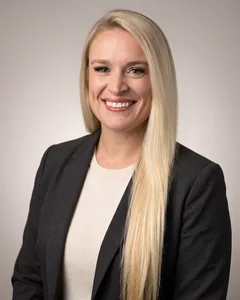
Stefanie Sicre, PMHNP-BC
Psychiatric Nurse Practitioner · Adults and teens 16+
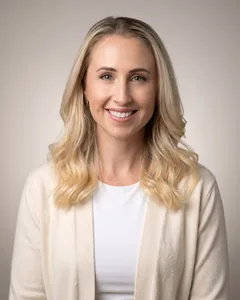
Hannah Parker, PA-C
Physician Assistant · Adults and teens 15+

Daniela Contreras, PA-C
Physician Assistant · Adults and teens 16+; 15 on request · English, Spanish
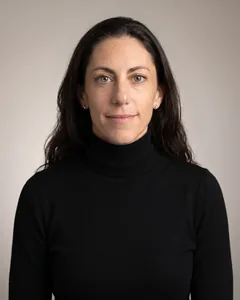
Dr. Sabina Goldstein, MD
Psychiatrist · Adults and teens 15+
Signs of grief, loss and complicated grief
- Intense yearning or longing for the person who died
- Preoccupation with thoughts or memories of the deceased
- Feeling that part of yourself has died
- Disbelief or difficulty accepting the death
- Avoiding reminders of the loss, or being unable to stop seeking them
- Intense emotional pain, anger, bitterness or guilt related to the death
- Difficulty re-engaging with friends, interests or plans
- Emotional numbness or feeling that life is meaningless
How we diagnose it
A grief evaluation at Stedfast Psychiatry begins with listening: who you lost, how, and what your days look like now. We use the Prolonged Grief Disorder scale (PG-13) and the Inventory of Complicated Grief to measure intensity, and the PHQ-9, GAD-7 and PCL-5 to assess whether depression, anxiety or trauma symptoms are also present, since each calls for a different plan. We distinguish prolonged grief from major depression: in grief, the pain is focused on the loss and comes in waves alongside moments of connection and even humor, with self-esteem usually intact; in depression, the mood is pervasively low across all areas, with worthlessness, and often loss of interest in everything. We assess suicide risk carefully, particularly in older widowed men and in parents who have lost a child. We also review sleep, alcohol use, appetite and physical health, since all are affected by loss.
Prolonged grief disorder affects an estimated 7 to 10 percent of bereaved adults, with higher rates after sudden or violent deaths.
Source: American Psychiatric Association, DSM-5-TR (2022); Lundorff et al., Journal of Affective Disorders, 2017
Prolonged grief disorder therapy produced response in 71 percent of patients compared with 32 percent for interpersonal psychotherapy in the original randomized trial.
Source: Shear et al., JAMA, 2005
In a four-site trial, grief-focused therapy was effective for prolonged grief while the antidepressant citalopram alone was not better than placebo for grief symptoms, though it helped co-occurring depression.
Source: Shear et al., JAMA Psychiatry, 2016
Widowed adults have an elevated risk of death in the months after a spouse's death, sometimes called the widowhood effect, with risk highest in the first three months.
Source: Moon et al., PLOS ONE, 2011 meta-analysis
Treatment for grief, loss and complicated grief in Fort Lauderdale
Medication management
Medication does not treat grief itself, and we do not medicate normal grief. When grief has brought on major depression, antidepressants such as sertraline, escitalopram or bupropion are effective, and treating the depression allows grief to proceed. For insomnia after a loss, short-term use of low-dose trazodone, doxepin or mirtazapine helps restore sleep without the risks of benzodiazepines or zolpidem, which we avoid because they blunt emotional processing and raise fall risk in older adults. When PTSD symptoms follow a traumatic death, SSRIs and prazosin for nightmares are used as in PTSD. Anxiety that spikes around anniversaries may be managed with short-term hydroxyzine. We review and often simplify medications in older adults who have lost a spouse, since the person who managed their pills may be gone.
Psychotherapy
Grief counseling provides a place to tell the story of the loss, make sense of it, and find a way to carry it, and for many people a few sessions are enough. For prolonged grief disorder, prolonged grief disorder therapy (developed by Dr. Katherine Shear, formerly called complicated grief treatment) is the best-studied approach: 16 sessions that combine revisiting the death, gradual re-engagement with avoided situations, strengthening the ongoing bond with the person who died, and rebuilding goals; it outperformed both interpersonal therapy and antidepressants in randomized trials. CBT for grief and meaning-centered approaches are also effective. For traumatic loss, trauma-focused therapy may come first. We also connect patients with support groups through hospices, GriefShare, The Compassionate Friends for bereaved parents, and survivors of suicide loss groups.
What to expect
Your first visit is a 45 to 60 minute conversation, in person or by video, with no expectation that you be composed. We assess where you are, whether what you are experiencing is grief alone or grief with depression, trauma or anxiety, and what would help. Some patients need a few counseling sessions, some need a structured course of grief therapy, and some need treatment for depression first. Follow-ups are scheduled to your needs. Telehealth is available throughout Florida and South Carolina and is often easier in the months after a loss.
The complete guide, including causes, subtypes and research, is on our Grief, Loss and Complicated Grief page.
Emergency and crisis resources near Fort Lauderdale
In an emergency, call 911 or go to Memorial Regional Hospital Emergency Department (3501 Johnson St, Hollywood). The 988 Suicide and Crisis Lifeline is available by call or text 24 hours a day. Broward Health Medical Center Emergency Department and 988 Suicide and Crisis Lifeline are also listed on the Fort Lauderdale office page.
Frequently asked questions
Who provides grief, loss and complicated grief treatment at the Fort Lauderdale office?
The Fort Lauderdale team includes psychiatrist Dr. Sabina Goldstein, psychiatric nurse practitioners Ashley Toledo and Stefanie Sicre and physician assistants Rodrigo Zuniga, Hannah Parker and Daniela Contreras. Visits in Spanish are available with Rodrigo Zuniga, Ashley Toledo and Daniela Contreras. Every provider works under psychiatrist oversight and the same evaluation standard: about an hour for a first visit, validated screening scales, and a written plan.
Can I be seen by video instead of coming to Fort Lauderdale?
Yes. Stedfast Psychiatry providers are licensed in Florida and offer video visits for evaluations and follow-ups. Some situations, including certain controlled-substance prescriptions and first visits for young children, require an in-person appointment at 3107 Stirling Road.
Does the Fort Lauderdale office take my insurance?
We accept most major commercial plans and Medicare. Call (561) 437-2413 with your member ID and we will verify benefits before the visit. Self-pay new-patient evaluations are $185.
How soon can a new patient be seen in Fort Lauderdale?
Most new patients are scheduled within one to two weeks. If you need to be seen sooner, ask about a video visit; those often open up within days. If you are in crisis, call or text 988 or go to the nearest emergency room rather than waiting.
Can I get Deep TMS or Spravato as a Fort Lauderdale patient?
Yes. Stedfast Psychiatry is licensed for both. Your Fort Lauderdale provider does the evaluation and the prior authorization; treatment sessions are scheduled at our Palm Beach Gardens TMS center and the Boynton Beach Spravato rooms.
How do I know if my grief is normal or something more?
Normal grief is painful and can last a long time, but it changes: the waves become less frequent, you reconnect with people and activities, and you can think about the person with warmth as well as pain. Grief that is stuck looks the same at 18 months as at 3 months, with constant yearning, avoidance of reminders or inability to stop seeking them, and a sense that life cannot go on. If you are not sure, that itself is a good reason for a conversation with a clinician.
What is the difference between grief and depression?
Grief centers on the loss and comes in waves; you can still feel moments of connection and your self-worth is usually intact. Depression is pervasive, flattens everything, and brings worthlessness, guilt unrelated to the death, and loss of interest in all areas. The two can coexist, and about one in five bereaved people develops major depression in the first year. Depression responds to antidepressants and therapy; grief itself responds to grief-focused therapy. We assess both.
Nearby Stedfast offices
If you are in crisis, call or text 988 or go to the nearest emergency room. Educational content; individual results vary. Reviewed by Dr. David Husted, board-certified psychiatrist.