PTSD is a treatable condition that follows trauma, marked by intrusive memories, avoidance, negative mood and hyperarousal lasting more than a month. First-line treatments are trauma-focused therapies (prolonged exposure, cognitive processing therapy, EMDR) and SSRIs such as sertraline and paroxetine, with prazosin for nightmares. Most people improve meaningfully within three to four months of consistent treatment. Stedfast Psychiatry treats post-traumatic stress disorder at 3107 Stirling Road in Fort Lauderdale and by video across Florida; new patients call (561) 437-2413.
Post-Traumatic Stress Disorder at our Fort Lauderdale office
For post-traumatic stress disorder treatment, residents of Oakridge, Emerald Hills, Avon Park and Liberia and Dania Beach, Plantation, Pembroke Pines and Cooper City are usually within a short drive. The office is on Stirling Road west of I-95, in the stretch between Fort Lauderdale, Hollywood, and Davie, close to State Road 7 (US 441).
Free surface parking is available in the lot in front of the building, with accessible spaces by the entrance. The lot is shared with neighboring businesses, so a short walk from your space is possible at peak times. Hours are Monday to Friday, 8:00 AM to 5:00 PM, with weekend appointments by arrangement. New patients call (561) 437-2413; existing patients use (561) 858-1951.
The Fort Lauderdale office is an entry point to Stedfast Psychiatry's Deep TMS and Spravato programs. Treatment sessions run at our Palm Beach Gardens TMS center and the Boynton Beach Spravato rooms, roughly 60 and 45 minutes away; the evaluation, the screening scales and the prior authorization all happen here.

Who you will see in Fort Lauderdale
The Fort Lauderdale team includes psychiatrist Dr. Sabina Goldstein, psychiatric nurse practitioners Ashley Toledo and Stefanie Sicre and physician assistants Rodrigo Zuniga, Hannah Parker and Daniela Contreras. Visits in Spanish are available with Rodrigo Zuniga, Ashley Toledo and Daniela Contreras. Children and teens are seen by Stefanie Sicre, Hannah Parker, Daniela Contreras and Sabina Goldstein.
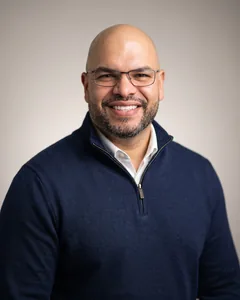
Rod Zuniga, PA-C
Physician Assistant · Adults 18+ · English, Spanish

Ashley Toledo, PMHNP-BC
Psychiatric Nurse Practitioner · Ages 10 through older adults · English, Spanish
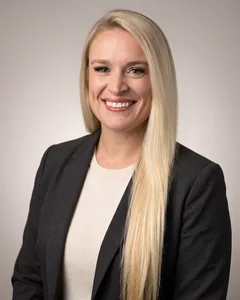
Stefanie Sicre, PMHNP-BC
Psychiatric Nurse Practitioner · Adults and teens 16+
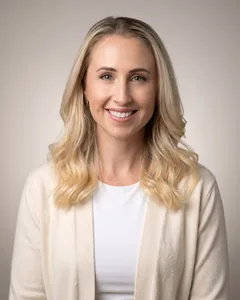
Hannah Parker, PA-C
Physician Assistant · Adults and teens 15+
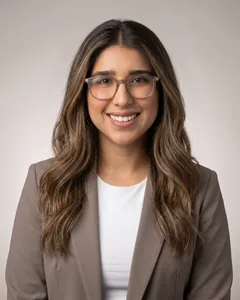
Daniela Contreras, PA-C
Physician Assistant · Adults and teens 16+; 15 on request · English, Spanish
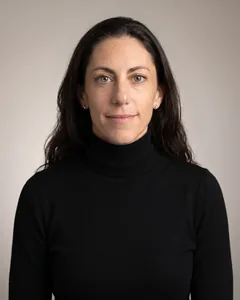
Dr. Sabina Goldstein, MD
Psychiatrist · Adults and teens 15+
Signs of post-traumatic stress disorder
- Intrusive memories, flashbacks or nightmares about the event
- Intense distress or physical reactions to reminders
- Avoiding people, places, conversations or thoughts connected to the trauma
- Persistent negative beliefs about yourself, others or the world
- Guilt, shame, fear or anger that does not lift
- Feeling detached from others or unable to feel positive emotions
- Being constantly on guard or easily startled
- Irritability, angry outbursts or reckless behavior
How we diagnose it
A PTSD evaluation at Stedfast Psychiatry begins with a clinical interview paced at your comfort. We use the PCL-5 (PTSD Checklist for DSM-5) to measure symptoms and track change, and the PHQ-9 and GAD-7 for the depression and anxiety that frequently accompany PTSD. We ask about the timing of the trauma and the onset of symptoms, sleep and nightmares, substance and alcohol use, chronic pain, traumatic brain injury in veterans and accident survivors, and safety at home. We distinguish PTSD from acute stress disorder (symptoms within the first month), adjustment disorder, panic disorder and depression. Labs are ordered when a medical contributor such as thyroid disease or sleep apnea is suspected.
About 3.6 percent of US adults had PTSD in the past year, and roughly 6.8 percent will have it at some point in their lives.
Source: NIMH, National Comorbidity Survey Replication
Women are more than twice as likely as men to develop PTSD (lifetime prevalence of about 9.7 percent versus 3.6 percent).
Source: NIMH
About 7 percent of veterans will have PTSD at some point in their lives, with higher rates among those deployed to Iraq and Afghanistan.
Source: US Department of Veterans Affairs, National Center for PTSD
Trauma-focused psychotherapies such as prolonged exposure and cognitive processing therapy are recommended as first-line treatment over medication.
Source: VA/DoD Clinical Practice Guideline for PTSD (2023)
Treatment for post-traumatic stress disorder in Fort Lauderdale
Medication management
SSRIs are first-line: sertraline and paroxetine are FDA-approved for PTSD, and fluoxetine and the SNRI venlafaxine have strong evidence. We start at a low dose and increase over several weeks; sleep and irritability often improve first, with broader benefit by eight to twelve weeks. Prazosin, an alpha-1 blocker, reduces trauma nightmares and improves sleep for many patients and is titrated at bedtime while watching blood pressure. We avoid benzodiazepines in PTSD because they do not help the core symptoms and can interfere with trauma therapy. Low-dose atypical antipsychotics or mood stabilizers are occasionally added for severe agitation or when PTSD coexists with bipolar disorder. We monitor side effects, blood pressure on prazosin and venlafaxine, and suicidal thoughts at every visit.
Psychotherapy
Trauma-focused therapy is the most effective treatment for PTSD and is recommended by the VA, the Department of Defense and the American Psychological Association. Prolonged exposure (PE) helps you approach memories and situations you have been avoiding in a controlled, graduated way. Cognitive processing therapy (CPT) targets the beliefs the trauma left behind, such as self-blame or the sense that nowhere is safe. Eye movement desensitization and reprocessing (EMDR) is a third well-supported option. Each is typically 8 to 16 sessions. Our therapists coordinate with your prescriber, and many patients combine therapy with an SSRI.
Interventional options
Deep TMS is not FDA-cleared for PTSD. It is cleared for major depressive disorder, OCD, anxious depression and smoking cessation, and because depression accompanies PTSD in about half of cases, patients with treatment-resistant depression alongside PTSD may be candidates for Deep TMS at our Palm Beach Gardens office for the depressive component. Spravato (esketamine) is FDA-approved for treatment-resistant depression and MDD with suicidal ideation in adults 18 and older, not for PTSD itself; it may be appropriate when PTSD coexists with depression that has not responded to two or more antidepressants.
What to expect
Your first visit is a 45 to 60 minute evaluation with a psychiatric provider, in person or by video. You control how much detail you share about the trauma; the diagnosis does not require a full account. You leave with a plan that may include medication, a referral to one of our trauma-focused therapists, or both. Follow-ups are every two to four weeks while medication is adjusted, then every one to three months. Telehealth is available throughout Florida and South Carolina and is often preferred by patients who find waiting rooms difficult.
The complete guide, including causes, subtypes and research, is on our Post-Traumatic Stress Disorder page.
Emergency and crisis resources near Fort Lauderdale
In an emergency, call 911 or go to Memorial Regional Hospital Emergency Department (3501 Johnson St, Hollywood). The 988 Suicide and Crisis Lifeline is available by call or text 24 hours a day. Broward Health Medical Center Emergency Department and 988 Suicide and Crisis Lifeline are also listed on the Fort Lauderdale office page.
Frequently asked questions
Who provides post-traumatic stress disorder treatment at the Fort Lauderdale office?
The Fort Lauderdale team includes psychiatrist Dr. Sabina Goldstein, psychiatric nurse practitioners Ashley Toledo and Stefanie Sicre and physician assistants Rodrigo Zuniga, Hannah Parker and Daniela Contreras. Visits in Spanish are available with Rodrigo Zuniga, Ashley Toledo and Daniela Contreras. Every provider works under psychiatrist oversight and the same evaluation standard: about an hour for a first visit, validated screening scales, and a written plan.
Can I be seen by video instead of coming to Fort Lauderdale?
Yes. Stedfast Psychiatry providers are licensed in Florida and offer video visits for evaluations and follow-ups. Some situations, including certain controlled-substance prescriptions and first visits for young children, require an in-person appointment at 3107 Stirling Road.
Does the Fort Lauderdale office take my insurance?
We accept most major commercial plans and Medicare. Call (561) 437-2413 with your member ID and we will verify benefits before the visit. Self-pay new-patient evaluations are $185.
How soon can a new patient be seen in Fort Lauderdale?
Most new patients are scheduled within one to two weeks. If you need to be seen sooner, ask about a video visit; those often open up within days. If you are in crisis, call or text 988 or go to the nearest emergency room rather than waiting.
Can I get Deep TMS or Spravato as a Fort Lauderdale patient?
Yes. Stedfast Psychiatry is licensed for both. Your Fort Lauderdale provider does the evaluation and the prior authorization; treatment sessions are scheduled at our Palm Beach Gardens TMS center and the Boynton Beach Spravato rooms.
Do I have to talk about the trauma to get treated?
Not at the first visit, and not in detail unless and until you choose to. A diagnosis can be made from your current symptoms and a brief description of the type of event. Medication does not require revisiting the trauma at all. Trauma-focused therapies such as PE and CPT do involve working with the memory, but at a pace you control, and they are the most effective treatments available because they resolve the memory rather than managing around it.
What is the best medication for PTSD?
Sertraline and paroxetine are FDA-approved for PTSD, and fluoxetine and venlafaxine are also well supported. They reduce intrusive symptoms, irritability and depression over 8 to 12 weeks. Prazosin is the best-studied medication for trauma nightmares. No medication is as effective as trauma-focused therapy, and combining the two is common. Benzodiazepines are not recommended for PTSD.
Nearby Stedfast offices
If you are in crisis, call or text 988 or go to the nearest emergency room. Educational content; individual results vary. Reviewed by Dr. David Husted, board-certified psychiatrist.