Stedfast Psychiatry evaluates and treats children and adolescents for ADHD, anxiety, depression, mood disorders, OCD, behavior problems and related conditions, with minimum ages varying by provider from four and up. Care includes parent involvement, school collaboration, age-appropriate rating scales, careful medication choices and therapy, in person or by video in Florida and South Carolina. In Jupiter, this is available at 3893 Military Trail and by video; new patients call (561) 332-4129.
Child and Adolescent Psychiatry at our Jupiter office
The Jupiter office at 3893 Military Trail, Suite 3 serves Jupiter Inlet Colony, Egret Landing, Loxahatchee Club, Jupiter Country Club and Rialto and the surrounding communities of Tequesta, Juno Beach, Palm Beach Gardens, Hobe Sound and North Palm Beach. Jupiter Medical Center is a useful landmark for first-time visitors.
New-patient scheduling for Jupiter runs through (561) 332-4129. Existing patients reach the office directly at (561) 834-4977. Free surface parking is available in front of the building, with accessible spaces by the entrance. If a same-week in-person slot is not open, a video visit with the same provider usually is.
The Jupiter office is an entry point to Stedfast Psychiatry's Deep TMS and Spravato programs. Treatment sessions run at our Palm Beach Gardens TMS center and the Palm Beach Gardens Spravato rooms, roughly 15 and 15 minutes away; the evaluation, the screening scales and the prior authorization all happen here.

Who you will see in Jupiter
The Jupiter team includes psychiatrist Dr. David Husted, psychiatric nurse practitioner Hannah Ray and physician assistant Makenzie Cummings. Children and teens are seen by Makenzie Cummings.

Dr. David Husted, MD
Psychiatrist · Adults
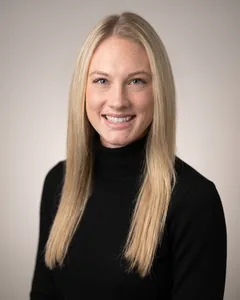
Hannah Ray, PMHNP-BC
Psychiatric Nurse Practitioner · Adults 18+

Makenzie Cummings, PA-C
Physician Assistant · Adults and teens 14+
How child and adolescent psychiatry works
A child or adolescent evaluation runs 60 minutes or more and is structured differently from an adult visit. The clinician typically meets with the parent and child together, then with the parent alone, then with the child or teen alone, because each will say things they will not say in front of the other. We take a developmental history (pregnancy, milestones, early temperament), a school history, a family psychiatric history, and a medical history. Rating scales are completed by parents and, where attention or behavior is the concern, by teachers: the Vanderbilt for ADHD, the SCARED for anxiety, the PHQ-A for adolescent depression, the CY-BOCS for OCD. Teens complete self-report versions.
School collaboration is part of the evaluation and of ongoing care. With your written permission we request teacher ratings, review report cards and any psychoeducational testing, and provide documentation to support 504 plans or IEP accommodations. We also explain to parents what accommodations are reasonable to request. For attention problems in particular, a diagnosis of ADHD requires evidence of impairment in more than one setting, so school input is not optional.
Treatment follows the diagnosis and the evidence for the age group. For childhood anxiety and OCD, CBT with parent involvement is first line, with an SSRI added for moderate to severe cases. For adolescent depression, therapy and, when needed, fluoxetine or escitalopram, the two antidepressants with FDA approval in adolescents. For ADHD, behavioral parent training for younger children and stimulant medication from age six, with non-stimulant options for children who do not tolerate stimulants. Medication in children is started at low doses and followed closely, with height, weight, blood pressure and heart rate tracked at every visit.
Who it is for
We see children and teens with attention and hyperactivity problems, anxiety (separation, social, generalized, school refusal), depression and irritability, mood swings that raise a question of bipolar disorder, OCD and tics, trauma reactions, oppositional and defiant behavior, autism spectrum disorder with co-occurring anxiety or ADHD, eating concerns and sleep problems. We also see teens who are already on medication from a pediatrician and need a specialist to take over, and families who have been told their child "might have" something and want a real evaluation.
A pediatrician referral is welcome but not required. Many families come to us after a school has raised a concern, after a 504 or IEP meeting, or after a frightening comment about not wanting to be alive. If your child or teen is in immediate danger, call or text 988 or go to the nearest emergency department; for everything short of that, call us and we will find a prompt appointment.
About 1 in 6 US children aged 2 to 8 has a diagnosed mental, behavioral or developmental disorder, and ADHD, anxiety and behavior problems are the most common diagnoses in children aged 3 to 17.
Source: CDC, Data and Statistics on Children's Mental Health
Half of all lifetime mental illness begins by age 14 and three quarters by age 24.
Source: Kessler et al., Archives of General Psychiatry, 2005
In the Treatment for Adolescents with Depression Study, combined fluoxetine and CBT produced a 71 percent response rate at 12 weeks, compared with 61 percent for fluoxetine alone and 43 percent for CBT alone.
Source: TADS, Journal of the American Medical Association, 2004
Nearly 1 in 5 adolescents reported seriously considering suicide in 2021, underscoring the need for early evaluation and treatment.
Source: CDC Youth Risk Behavior Survey, 2021
What to expect at your first visit
The first visit is long and involves a good deal of paperwork; completing the intake forms and rating scales through the portal in advance helps. Bring report cards, any prior testing, school communications and a list of current medications. Both parents are welcome; if parents are separated, we ask that the parent with legal authority to consent attend and we are glad to share information with both where the custody arrangement allows.
Follow-ups are every two to four weeks while a medication is being started or adjusted, then every one to three months. Children on stimulants are seen at least every three months, with growth and vital signs checked each time. Therapy, when part of the plan, is weekly. Video visits work well for teens and for medication follow-ups; younger children usually do better in the office, where the clinician can observe play and behavior directly. Parents have access to the portal for questions between visits.
Cost and insurance in Jupiter
Child and adolescent psychiatric evaluation, medication management and therapy are covered by most commercial insurance plans under the child's behavioral health benefit. Florida Medicaid and South Carolina Medicaid coverage varies by provider and location; ask our front desk which clinicians participate. Your cost is the plan's specialist or behavioral health copay or coinsurance. Some plans require a pediatrician referral; we check at verification.
The self-pay rate for a new-patient evaluation is $185, with lower rates for follow-ups and therapy. Teacher rating scales, school letters and 504/IEP documentation are included in the cost of care; lengthy custom reports for schools or courts may carry a separate fee that we quote in advance. Labs are billed by the laboratory.
Full details, risks and research are on the main Child and Adolescent Psychiatry page.
Emergency and crisis resources near Jupiter
In an emergency, call 911 or go to Jupiter Medical Center Emergency Department (1210 S Old Dixie Hwy, Jupiter). The 988 Suicide and Crisis Lifeline is available by call or text 24 hours a day. Palm Beach Gardens Medical Center Emergency Room and 988 Suicide and Crisis Lifeline are also listed on the Jupiter office page.
Frequently asked questions
Who provides child and adolescent psychiatry at the Jupiter office?
The Jupiter team includes psychiatrist Dr. David Husted, psychiatric nurse practitioner Hannah Ray and physician assistant Makenzie Cummings. Every provider works under psychiatrist oversight and the same evaluation standard: about an hour for a first visit, validated screening scales, and a written plan.
Can I be seen by video instead of coming to Jupiter?
Yes. Stedfast Psychiatry providers are licensed in Florida and offer video visits for evaluations and follow-ups. Some situations, including certain controlled-substance prescriptions and first visits for young children, require an in-person appointment at 3893 Military Trail.
Does the Jupiter office take my insurance?
We accept most major commercial plans and Medicare. Call (561) 332-4129 with your member ID and we will verify benefits before the visit. Self-pay new-patient evaluations are $185.
How soon can a new patient be seen in Jupiter?
Most new patients are scheduled within one to two weeks. If you need to be seen sooner, ask about a video visit; those often open up within days. If you are in crisis, call or text 988 or go to the nearest emergency room rather than waiting.
Can I get Deep TMS or Spravato as a Jupiter patient?
Yes. Stedfast Psychiatry is licensed for both. Your Jupiter provider does the evaluation and the prior authorization; treatment sessions are scheduled at our Palm Beach Gardens TMS center and the Palm Beach Gardens Spravato rooms.
What is the youngest age you see?
It depends on the clinician. Some Stedfast providers see children from age four; others see school-age children from six or seven; some see adolescents only. When you call, our scheduling team will match your child to a clinician who works with their age group and, where relevant, their specific concern.
How are parents involved?
Closely. Parents attend the evaluation, provide history and rating scales, help make treatment decisions, and for younger children carry out much of the therapy at home. We meet with parents separately as well as with the child. For teens we balance parental involvement with the teen's need for some privacy, and we explain to both what is and is not confidential.
Will you work with my child's school?
Yes, with your written permission. We request teacher rating scales for ADHD and behavior evaluations, review prior testing, provide letters to support 504 plans and IEPs, and will speak with school counselors or psychologists when it helps. Evidence of impairment in more than one setting is required for an ADHD diagnosis, so school input matters.
Nearby Stedfast offices
If you are in crisis, call or text 988 or go to the nearest emergency room. Educational content; individual results vary. Reviewed by Dr. David Husted, board-certified psychiatrist.