Psychiatric medication management at Stedfast Psychiatry means a prescriber selects a medication based on your diagnosis and history, starts at a safe dose, sees you again in two to four weeks to measure response with scales like the PHQ-9, and adjusts until symptoms remit. Visits are in person at 13 offices or by telehealth in Florida and South Carolina. In Stuart, this is available at 729 SW Federal Hwy and by video; new patients call (561) 257-3099.
Medication Management at our Stuart office
The Stuart office at 729 SW Federal Hwy, Suite 104 serves Port Salerno, Hutchinson Island, Willoughby, Mariner Sands and Martin Downs and the surrounding communities of Palm City, Jensen Beach, Port Salerno, Hobe Sound and Sewall's Point. Roosevelt Bridge is a useful landmark for first-time visitors.
Call (561) 257-3099 to book, or request an appointment online and we will call you back. The office is open weekdays 8:00 AM to 5:00 PM. The office is on US-1 (SW Federal Highway) on the south side of Stuart, a few minutes from downtown and the Roosevelt Bridge. From I-95, take exit 101 for State Road 76 (Kanner Highway) and head east toward downtown Stuart for about five miles, then turn south onto US-1.
The Stuart office is an entry point to Stedfast Psychiatry's Deep TMS and Spravato programs. Treatment sessions run at our Palm Beach Gardens TMS center and the Palm Beach Gardens Spravato rooms, roughly 40 and 40 minutes away; the evaluation, the screening scales and the prior authorization all happen here.

Who you will see in Stuart
The Stuart team includes psychiatric nurse practitioners Jienne Torres and Maria Ramos and physician assistant Alacia Sims. Visits in Spanish are available with Jienne Torres. Children and teens are seen by Alacia Sims and Jienne Torres.

Alacia Sims, PA-C
Physician Assistant · Adults and teens 15+
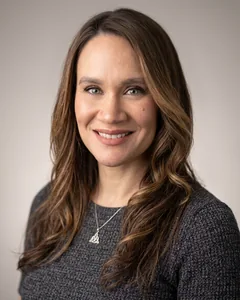
Jienne Torres, PMHNP-BC
Psychiatric Nurse Practitioner · Children 5+, adolescents and adults · English, Spanish

Maria Ramos, PMHNP-BC
Psychiatric Nurse Practitioner · Ages 12 and up
How medication management works
Prescribing starts with the diagnosis and your history. For a first episode of depression, a generic SSRI such as sertraline or escitalopram is a reasonable first choice because it is effective, well studied and inexpensive. For depression with low energy or in a patient who has had sexual side effects on an SSRI, bupropion may be better. For ADHD, a stimulant is first line for most patients, with non-stimulants such as atomoxetine or guanfacine for those who cannot take one. For bipolar disorder, a mood stabilizer or an atypical antipsychotic comes before any antidepressant. Your provider explains why a given medication is being chosen over the alternatives.
We start at a low dose, increase in steps, and give each dose enough time to work. Antidepressants typically need four to six weeks at a therapeutic dose before response can be judged; stimulants show their effect within days. At each follow-up we repeat the relevant scale (PHQ-9, GAD-7, ASRS or others), ask about side effects, and check adherence. If a medication has had an adequate trial without adequate response, we switch, add a second agent, or reconsider the diagnosis. Pharmacogenetic testing, which looks at how your body metabolizes certain drugs, is available as an optional tool when several medications have failed or side effects are unusual; it informs choice but does not replace clinical judgment.
Some medications require monitoring. Lithium levels, kidney and thyroid tests are checked regularly. Clozapine requires blood counts on a fixed schedule. Atypical antipsychotics call for periodic weight, glucose and lipid checks. We order these, track them and tell you the results.
Who it is for
Medication management is for anyone whose evaluation points to a condition that responds to medication: depression, anxiety disorders, ADHD, bipolar disorder, OCD, PTSD, insomnia, schizophrenia and others. It is also for people already on psychiatric medication who need a prescriber to take over, review the regimen, or figure out why it stopped working.
People often come to us after a primary care physician has started an antidepressant and reached the limit of what a general practice can manage. Others have been on the same medication for ten years without anyone asking whether it is still needed. Some have tried four or five medications and are told nothing works; those patients often have an unrecognized diagnosis, an inadequate dose, or a candidate for augmentation, Deep TMS or Spravato. New patients start with a psychiatric evaluation; transfers of care can usually bring their records and continue without interruption.
In the STAR*D trial, about one third of patients reached remission on the first antidepressant, and the cumulative remission rate rose to roughly 67 percent after up to four sequential treatment steps.
Source: STAR*D, National Institute of Mental Health
Roughly half of patients stop taking a newly prescribed antidepressant within the first few months, and lack of follow-up is a major driver of early discontinuation.
Source: Sansone and Sansone, Innovations in Clinical Neuroscience, 2012
Measurement-based care, in which symptom scales are repeated at each visit, produces faster and higher rates of response and remission than usual care.
Source: Guo et al., American Journal of Psychiatry, 2015
About 16 percent of US adults took a prescription medication for a mental health condition in 2020.
Source: CDC, National Center for Health Statistics
What to expect at your first visit
After the evaluation, your first medication follow-up is usually two to four weeks out, sooner for ADHD or if a medication is being started that needs early checks. Follow-ups last 20 to 30 minutes. Once you are stable, visits space out to every one to three months. Patients on controlled substances are seen at least every three months, and more often while the dose is being set.
Refills are issued at visits. If you run short between appointments, request a refill through the patient portal or your pharmacy at least three business days before you run out, and we will bridge you to the next visit if your care is current. We do not refill for patients who have missed follow-ups beyond a brief bridge; staying on a medication without monitoring is not safe prescribing. Telehealth is available for most medication visits for patients in Florida and South Carolina, with the exceptions described below for controlled substances.
Cost and insurance in Stuart
Medication management visits are covered by most major commercial plans and Medicare as outpatient psychiatric services. Your share is the specialist copay or coinsurance after deductible. Self-pay follow-up visits are billed at a flat rate lower than the $185 new-patient visit; ask our front desk for the current schedule.
The medications themselves are billed through your pharmacy benefit. We prescribe generics whenever a generic is clinically equivalent, which keeps most prescriptions in the lowest copay tier. Some brand-name or newer medications require prior authorization from your insurer; we handle those requests and will suggest an alternative if a request is denied. Pharmacogenetic testing is optional and may or may not be covered depending on your plan; we tell you the expected cost before ordering it. Lab monitoring is billed by the laboratory and is usually covered as routine testing.
Full details, risks and research are on the main Psychiatric Medication Management page.
Emergency and crisis resources near Stuart
In an emergency, call 911 or go to Cleveland Clinic Martin North Hospital Emergency Department (200 SE Hospital Ave, Stuart). The 988 Suicide and Crisis Lifeline is available by call or text 24 hours a day. Cleveland Clinic Martin South Hospital Emergency Department and 988 Suicide and Crisis Lifeline are also listed on the Stuart office page.
Frequently asked questions
Who provides medication management at the Stuart office?
The Stuart team includes psychiatric nurse practitioners Jienne Torres and Maria Ramos and physician assistant Alacia Sims. Visits in Spanish are available with Jienne Torres. Every provider works under psychiatrist oversight and the same evaluation standard: about an hour for a first visit, validated screening scales, and a written plan.
Can I be seen by video instead of coming to Stuart?
Yes. Stedfast Psychiatry providers are licensed in Florida and offer video visits for evaluations and follow-ups. Some situations, including certain controlled-substance prescriptions and first visits for young children, require an in-person appointment at 729 SW Federal Hwy.
Does the Stuart office take my insurance?
We accept most major commercial plans and Medicare. Call (561) 257-3099 with your member ID and we will verify benefits before the visit. Self-pay new-patient evaluations are $185.
How soon can a new patient be seen in Stuart?
Most new patients are scheduled within one to two weeks. If you need to be seen sooner, ask about a video visit; those often open up within days. If you are in crisis, call or text 988 or go to the nearest emergency room rather than waiting.
Can I get Deep TMS or Spravato as a Stuart patient?
Yes. Stedfast Psychiatry is licensed for both. Your Stuart provider does the evaluation and the prior authorization; treatment sessions are scheduled at our Palm Beach Gardens TMS center and the Palm Beach Gardens Spravato rooms.
How often will I need to be seen?
Every two to four weeks while a medication is being started or adjusted, then every one to three months once you are stable. Patients on stimulants or other controlled substances are seen at least every three months by policy. Follow-up visits run 20 to 30 minutes. If something changes between visits, message us through the portal; we can often add a short visit rather than wait.
Can I get my prescriptions through telehealth?
Most non-controlled medications, yes, for patients physically in Florida or South Carolina at the time of the visit. Controlled substances are more restricted. Federal rules currently allow telehealth prescribing of controlled substances under temporary flexibilities, and Florida law requires an in-person examination before Schedule II medications such as stimulants are prescribed by telehealth, with limited exceptions. We will tell you at scheduling which visits must be in the office.
What is your policy on stimulants and benzodiazepines?
We prescribe them when they are the right treatment and we prescribe them carefully. Stimulants require a completed ADHD evaluation, a check of the state prescription monitoring database (E-FORCSE in Florida, SCRIPTS in South Carolina), and follow-up at least every three months. Benzodiazepines are generally used short term or as a bridge while a longer-term treatment takes effect, not as a primary long-term anxiety medication. Early refills for lost or stolen controlled prescriptions are not routine.
Nearby Stedfast offices
If you are in crisis, call or text 988 or go to the nearest emergency room. Educational content; individual results vary. Reviewed by Dr. David Husted, board-certified psychiatrist.