Spravato fails for roughly a third of patients, and some have genuinely bad experiences. The usual reasons are an undiagnosed bipolar or medical contributor, an inadequate dose or course, untreated substance use, severe dissociation that was not managed, or expectations set too high. Non-response is not a verdict on you, and Deep TMS and other options remain.
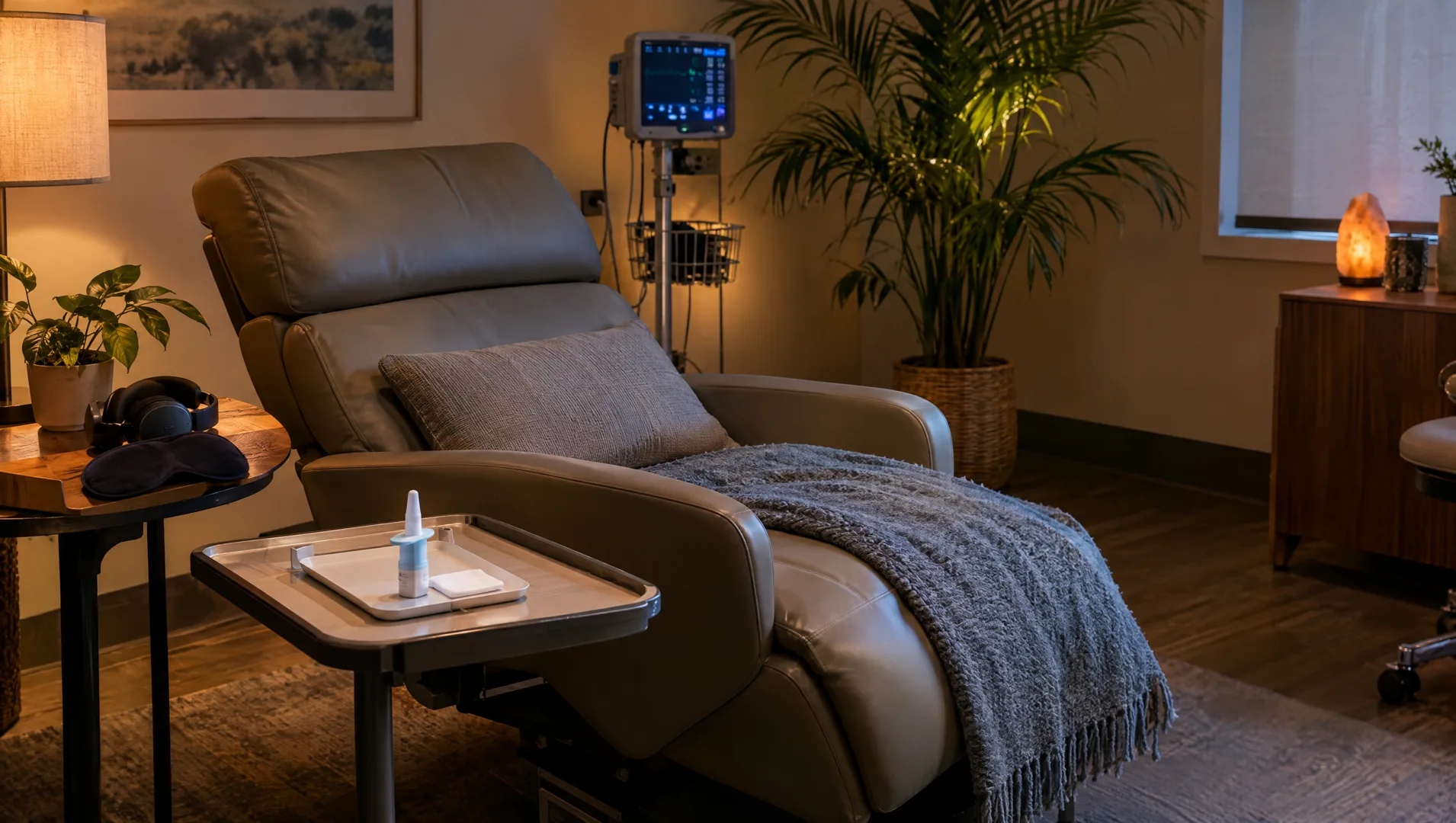
If you have searched phrases like "Spravato ruined my life" or "Spravato horror stories," you have found people describing real distress: treatment that did nothing after months of sessions, dissociation that felt terrifying, depression that deepened, or a sense that a clinic pushed them through a protocol without listening. I prescribe Spravato, and I do not think the right response to those accounts is to dismiss them. The right response is to explain what is going on, because most of the failures have identifiable causes.
First, the base rate
In the phase 3 trials, about half of patients responded to Spravato plus an antidepressant within four weeks, and about a third reached remission. Turn those numbers around: roughly half did not respond fully in a month, and roughly two thirds did not reach remission. In a treatment-resistant population that had already failed multiple medications, that is a good result. It also means that for every two people who do well, one does not, and that person is not an outlier. They are a predictable part of the data.
Most of the negative accounts online are from that third. Their experience is real; what is sometimes missing is the context that non-response is common, expected and not the end of the road.
Reasons Spravato does not work
The diagnosis was incomplete
This is the one I see most. Spravato is approved for major depressive disorder. If the underlying condition is bipolar depression, the antidepressant effect may be brief, absent or followed by a worsening of mood instability. If the depression is driven by untreated sleep apnea, hypothyroidism, chronic pain, a neurological condition or heavy alcohol or cannabis use, no antidepressant will hold. A psychiatric evaluation before Spravato should screen for all of these. When it does not, the treatment fails and the patient blames the drug.
The dose or course was inadequate
The first session is 56 mg. Many patients need 84 mg, which the label allows from the second session. Some clinics never increase the dose. Others stop after a few sessions when the patient does not feel dramatically different, before the three-to-four-week point where most responses become clear. Conversely, some patients who have had no improvement at all by week four are kept on indefinitely, at considerable cost, when the protocol should have been reassessed.
The oral antidepressant was wrong or absent
Spravato is approved for use with an oral antidepressant. In the trials the antidepressant was newly started at the same time. A patient who stays on a medication that has already failed, or who stops their antidepressant because Spravato is supposed to replace it, is not getting the treatment that was studied.
Severe dissociation or anxiety during sessions
A minority of patients find dissociation frightening rather than neutral, particularly in the first sessions, and especially if they have a trauma history or panic disorder. If that is not addressed with reassurance, a slower ramp, environmental adjustments or in some cases a dose reduction, the sessions themselves become a source of dread. Some people stop for that reason and describe the experience as the drug making them worse. The depression did not worsen; the treatment experience was mishandled.
Expectations
Spravato is marketed, accurately, as fast-acting. Patients sometimes arrive expecting to walk out of session one transformed. When they instead feel tired and odd for an afternoon and no better the next day, the gap between expectation and reality reads as failure. The honest framing is that most responders see clear change in weeks two to four.
Interactions and sedatives
Benzodiazepines taken on the morning of treatment can blunt the effect. So can heavy alcohol use between sessions. These are common and under-discussed.
When it genuinely causes harm
Some reports are not about non-response but about adverse effects, and those deserve separate acknowledgment.
- Blood pressure events. In patients with undiagnosed vascular disease or uncontrolled hypertension, the pressure rise can be dangerous. Proper screening prevents this.
- Persistent dissociative symptoms. Rare, but reported, usually in people with prior dissociative tendencies or trauma. This is a reason to stop.
- Worsened suicidal thinking. Any antidepressant can be associated with this in some patients, and a depression that does not respond can deepen on its own. Close monitoring and a clear crisis plan are not optional. If you are in crisis, call or text 988.
- Urinary symptoms. Uncommon at approved doses but real; they should prompt evaluation and possibly stopping.
- Financial harm. Months of sessions without benefit, at hundreds of dollars each, is a harm. A clinic that does not measure response with rating scales and does not have a reassessment point is not treating you well.
What non-response does not mean
It does not mean your depression is untreatable. Non-response to Spravato does not predict non-response to Deep TMS, to IV ketamine, to ECT or to medication combinations that have not been tried. Each works through a different mechanism, and the treatment-resistant depression literature is full of patients who failed one and responded to the next.
It does not mean you did something wrong. Patients often blame themselves for not relaxing enough during sessions or not believing in it. The response is biological and the trials did not find that attitude predicted outcome.
What to do next
If Spravato has not worked for you, or if you stopped because of the experience, here is what a careful next step looks like.
- Re-examine the diagnosis. A fresh evaluation that specifically screens for bipolar spectrum illness, sleep disorders, thyroid function, substance use and chronic medical contributors.
- Review what actually happened. Dose reached, number of sessions, oral antidepressant, sedatives, rating scale scores if any were collected.
- Consider Deep TMS. A non-drug treatment with a different mechanism and no dissociation, with good response rates in people who have failed multiple treatments including Spravato. We offer it at our Palm Beach Gardens office.
- Consider ECT if the depression is severe, psychotic or urgent.
- Consider a medication strategy that has not been tried, such as lithium or an atypical antipsychotic augmentation, or an MAOI, which are underused.
- Add or change psychotherapy, because treatment-resistant depression often has a behavioral and cognitive component that no drug reaches.
How we try to prevent the bad outcomes
At Stedfast Psychiatry, every Spravato patient has a full psychiatric evaluation before the first session, with specific screening for bipolar disorder and medical contributors. We adjust the dose to 84 mg at session two unless there is a reason not to. We measure symptoms with a rating scale at every visit and we tell patients in advance that four weeks is the reassessment point. We talk about dissociation before it happens, and a psychiatrist is on site at our Boynton Beach, Palm Beach Gardens and Royal Palm Beach Spravato offices during every session. None of that guarantees a response. It does mean that if Spravato fails, we will know why and we will have a next step ready.
Bottom line
Spravato does not work for everyone, and the people who say so online are describing something real. The usual causes are an incomplete diagnosis, an inadequate course, unmanaged session effects or expectations set too high, and each of these is addressable. If it has failed you, the useful response is a careful re-evaluation and a different mechanism, not the conclusion that nothing works.
Frequently asked questions
What percentage of people does Spravato not work for?
In the phase 3 trials, about half of patients did not reach response within four weeks and about two thirds did not reach remission, in a population that had already failed multiple antidepressants. Non-response is common and expected, and it does not predict failure of other treatments such as Deep TMS or ECT.
Can Spravato make depression worse?
Directly, rarely. More often, a depression that does not respond continues to worsen on its own, or a frightening session experience leads to stopping treatment and losing hope. Any worsening of mood or suicidal thinking during treatment should be reported immediately, and in a crisis call or text 988.
Is it my fault if Spravato did not work?
No. Response is biological and the trials did not find that attitude or effort during sessions predicted outcome. The most common reasons for failure, such as an incomplete diagnosis, an inadequate dose or an unaddressed medical contributor, are clinical issues, not personal ones.
What should I try if Spravato failed?
A fresh evaluation that screens for bipolar spectrum illness and medical contributors, then a treatment with a different mechanism. Deep TMS is the most common next step; ECT for severe or urgent depression; and medication strategies such as lithium augmentation or an MAOI that are often left untried.
Related reading
- Spravato Side Effects and Who Should Not Take It
- Treatment-Resistant Depression: What to Try Next
- How Long Does Spravato Take to Work?
- Does TMS Work? What the Evidence Shows
This article is educational and does not replace evaluation by a licensed clinician. If you are in crisis, call or text 988.