The most common Spravato side effects are dissociation, dizziness, nausea, sedation, a temporary blood pressure rise and headache, all occurring during the two-hour monitored session and resolving the same day. Serious risks include severe sedation and respiratory depression with other sedatives. People with aneurysms, arteriovenous malformations or a history of brain bleeding should not take it.
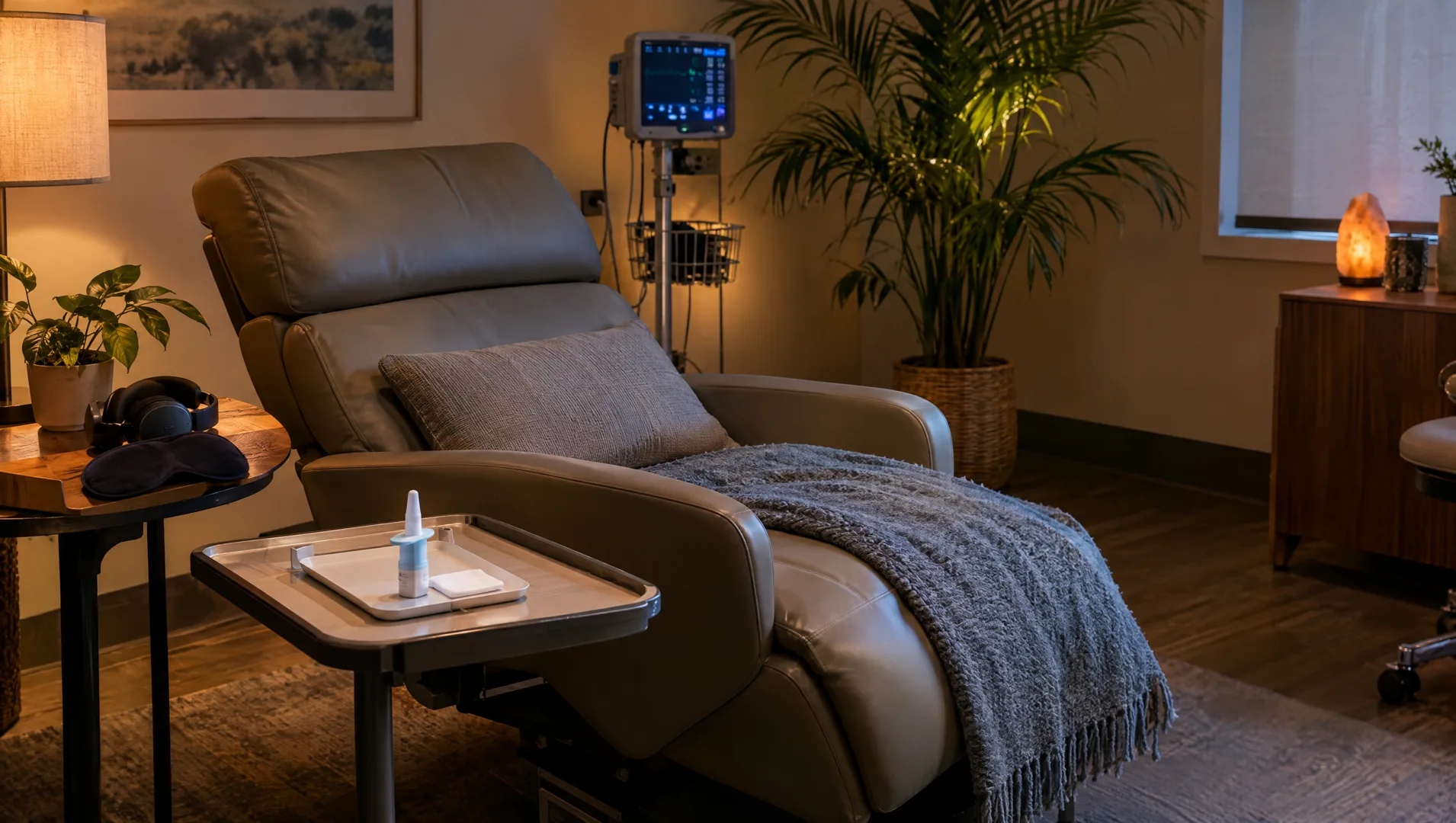
Spravato's side effects are front-loaded, predictable and mostly confined to the two hours after dosing. That is why the FDA requires the monitoring, and it is also why most patients tolerate the treatment well once they know what to expect. Here is the full picture from the label, the trials and our clinic.
Common side effects on the day of treatment
These figures come from the pooled phase 3 trials in the FDA label, in which patients received Spravato plus an oral antidepressant.
| Side effect | Approximate frequency | Timing and duration |
|---|---|---|
| Dissociation (feeling detached, dreamlike, altered perception) | About 41 percent | Begins within 20 minutes, peaks at 40, resolves by 90 to 120 |
| Dizziness | About 29 percent | During session; worse on standing |
| Nausea | About 28 percent | During session; reduced by fasting beforehand |
| Sedation or sleepiness | About 23 percent | During session and for hours afterward |
| Vertigo (spinning sensation) | About 23 percent | During session |
| Reduced sense of touch or numbness | About 18 percent | During session |
| Anxiety | About 13 percent | Usually early in treatment, during onset |
| Lethargy | About 11 percent | Rest of the day |
| Increased blood pressure | About 10 percent with a clinically notable rise | Peaks at 40 minutes, returns to baseline by 2 hours |
| Vomiting | About 9 percent | During session |
| Feeling drunk | About 5 percent | During session |
| Headache | About 20 percent | Same day |
Most of these peak in the first few sessions and lessen as treatment continues. Dissociation in particular is usually most intense at session one and becomes milder and more familiar over the induction phase. Very few patients in the trials stopped treatment because of side effects; discontinuation rates were in the single digits.
Blood pressure
Spravato raises blood pressure in most patients by a modest amount, typically 10 to 20 points systolic, peaking around 40 minutes after dosing and returning to baseline within two hours. For people with well-controlled blood pressure this is not dangerous, but it is why we check before dosing and at 40 minutes. If your pre-dose pressure is above the threshold on the label, we postpone. If your pressure stays elevated at the end of monitoring, we keep you longer and may refer you for evaluation. Uncontrolled hypertension needs to be managed before starting.
Serious risks and the boxed warning
The FDA label carries a boxed warning for three things.
Sedation. Deep sleepiness occurred in a meaningful minority of patients. Combined with alcohol, benzodiazepines, opioids or other sedatives, sedation can become dangerous, including slowed breathing. This is why we review every medication you take and why you must not drink alcohol on treatment days.
Dissociation. Listed as a boxed warning because of its intensity for some patients and the impairment it causes, which is the reason you cannot drive until the next day.
Abuse and misuse. Esketamine is a Schedule III controlled substance with known potential for misuse. The REMS program, under which Spravato is never dispensed for home use and every dose is documented, exists to manage this risk.
Separately, the label notes that antidepressants carry a warning about suicidal thoughts in young adults. Spravato is approved for adults only. Respiratory depression has been reported, rarely, particularly with other sedatives.
Who should not take Spravato
The contraindications on the label are specific.
- Aneurysmal vascular disease, including aneurysms of the brain, chest, abdomen or peripheral arteries.
- Arteriovenous malformation.
- History of intracerebral hemorrhage (bleeding in the brain).
- Known hypersensitivity to esketamine or ketamine.
These all relate to the blood pressure rise: a temporary spike is harmless for most people and dangerous for someone with a weakened vessel.
Beyond the formal contraindications, we are cautious or seek specialist input in these situations.
- Uncontrolled hypertension or a recent heart attack, stroke or unstable heart disease.
- Current psychosis, because dissociation can worsen it.
- Active substance use disorder, especially ketamine, alcohol or sedatives, because of misuse and interaction risk.
- Pregnancy and breastfeeding. Spravato is not recommended; ketamine-related drugs have shown harm in animal studies and there is no adequate human data.
- Severe liver disease, which slows clearance.
- Adolescents and children, for whom it is not approved.
Long-term concerns
Spravato has now been in use since 2019 and patients in extension studies have been followed for several years. Three long-term questions get asked most.
Cognition. Long-term studies in the SUSTAIN program tested cognitive function repeatedly over a year or more and found no decline. Older patients showed slower reaction times early in treatment that did not progress.
Bladder. Ketamine cystitis, an inflammatory bladder condition, is well documented in people using high doses of recreational ketamine daily. At Spravato doses and frequencies, urinary symptoms were uncommon in trials and resolved when reported. We ask about urinary symptoms at every visit.
Dependence. There is no evidence of withdrawal when Spravato is stopped, and no craving was reported in trials. The controlled setting removes the opportunity for escalation.
How Spravato side effects compare with alternatives
Compared with oral antidepressants, Spravato has no weight gain, no sexual side effects and no daily grogginess, because its effects are confined to treatment days. Compared with Deep TMS, it has more session-day effects (TMS causes scalp discomfort and headache but no dissociation or blood pressure change) and requires a driver, while TMS does not. Compared with IV ketamine, the side effects are nearly identical because the drugs are nearly identical; the difference is the standardized monitoring. Compared with ECT, Spravato involves no anesthesia and no memory effects. Which profile is acceptable is an individual judgment, and it is part of the conversation before choosing a path.
Managing side effects in the clinic
A few practical measures make a large difference. Fasting for two hours and avoiding liquids for 30 minutes before dosing cuts nausea; an anti-nausea medication can be given beforehand for those who need it. Reclining, dim light and headphones reduce the intensity of dissociation and anxiety. Standing slowly prevents dizziness-related falls. Holding benzodiazepines on the morning of treatment, when safe, reduces sedation. Pre-dose blood pressure management keeps the session on schedule.
When to call the clinic
- Severe or persistent headache after the session.
- Chest pain, shortness of breath or a blood pressure reading above your usual range at home.
- Dissociation or confusion that has not fully cleared by the next morning.
- Painful or frequent urination, or blood in the urine.
- New or worsening thoughts of self-harm. Call or text 988 in an emergency.
- Any new medication, especially sedatives, opioids or stimulants, so we can check for interactions.
Bottom line
Spravato's side effects are real, mostly limited to the monitored session, and manageable with the protocol the FDA built around the drug. The serious risks are concentrated in people with vascular abnormalities, uncontrolled blood pressure or sedative use, which a careful evaluation identifies in advance. For the majority of patients with treatment-resistant depression, the side effects are an inconvenience on treatment days rather than a reason to avoid an effective option.
Frequently asked questions
What are the most common Spravato side effects?
Dissociation (about 41 percent), dizziness (29 percent), nausea (28 percent), sedation (23 percent), vertigo (23 percent) and headache (about 20 percent), according to the FDA label. These occur during the two-hour session and resolve the same day, and they generally lessen after the first few treatments.
Does Spravato raise blood pressure?
Yes, temporarily. Most patients see a rise of 10 to 20 points systolic peaking about 40 minutes after dosing and returning to baseline within two hours. Blood pressure is checked before dosing and at 40 minutes; uncontrolled hypertension must be managed before treatment begins.
Who cannot take Spravato?
Anyone with an aneurysm, arteriovenous malformation, history of brain hemorrhage, or allergy to ketamine or esketamine. It is also avoided in pregnancy and breastfeeding, active psychosis, uncontrolled hypertension, and active substance use disorder, and it is not approved for people under 18.
Does Spravato cause long-term brain damage?
No evidence supports that at approved doses. Long-term extension studies followed patients for over a year with repeated cognitive testing and found no decline. Concerns about cognition and bladder damage come from high-dose daily recreational ketamine use, which is a very different exposure.
Can I take Spravato with benzodiazepines?
With caution. Benzodiazepines increase sedation during the session and may blunt the antidepressant effect. Many clinics ask patients to skip the morning dose on treatment days when it is safe to do so. Never combine Spravato with alcohol or opioids on treatment days.
Related reading
- What Does a Spravato Session Feel Like?
- Why Spravato Did Not Work for Some People, and What That Means for You
- Spravato vs Ketamine Infusions: An Honest Comparison
- TMS Side Effects: What Is Normal and What Is Not
This article is educational and does not replace evaluation by a licensed clinician. If you are in crisis, call or text 988.