OCD involves intrusive, unwanted thoughts and repetitive behaviors or mental rituals performed to relieve the anxiety they cause. It is treated with SSRIs at higher doses than for depression, exposure and response prevention (ERP) therapy, or both. For OCD that does not respond, Deep TMS is FDA-cleared and antipsychotic augmentation is an option. Most patients improve within six months. Stedfast Psychiatry treats obsessive-compulsive disorder at 10301 Hagen Ranch Rd in Boynton Beach and by video across Florida; new patients call (561) 437-2179.
Obsessive-Compulsive Disorder at our Boynton Beach office
The Boynton Beach office at 10301 Hagen Ranch Rd, Suite D720 and Suite B710 serves Valencia Lakes, Valencia Isles, Aberdeen, Indian Spring and Palm Isles and the surrounding communities of Delray Beach, Lake Worth Beach, Greenacres, Lantana and Hypoluxo. Bethesda Health City campus is a useful landmark for first-time visitors.
New-patient scheduling for Boynton Beach runs through (561) 437-2179. Existing patients reach the office directly at (561) 408-1559. Free surface parking surrounds the Bethesda Health City buildings, with accessible spaces near each entrance. If a same-week in-person slot is not open, a video visit with the same provider usually is.
Spravato (esketamine) sessions are delivered on site in Boynton Beach. Deep TMS is delivered at our Palm Beach Gardens office, about 35 minutes away, and the evaluation can be done here.

Who you will see in Boynton Beach
The Boynton Beach team includes psychiatrists Dr. Peter Gobar and Ana Paula Aun, psychiatric nurse practitioners Sara Hetzler, Andres Luque, Michael Carraturo, Leetal Kirshenberg, Dara Castillo and Kayla Marzullo and physician assistant Madison Algayer. Visits in Spanish and Portuguese are available with Andres Luque and Ana Paula Aun. Children and teens are seen by Sara Hetzler, Madison Algayer, Leetal Kirshenberg and Dara Castillo.
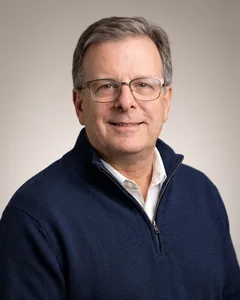
Dr. Peter Gobar, MD
Psychiatrist · Adults
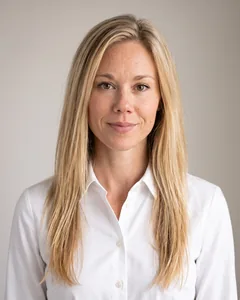
Sara Hetzler, PMHNP-BC
Psychiatric Nurse Practitioner · Children, adolescents and adults
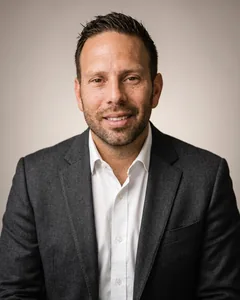
Andres Luque, PMHNP-BC
Psychiatric Nurse Practitioner · Adults 18 to 80 · English, Spanish
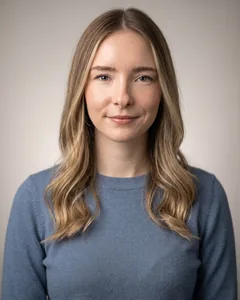
Madison Algayer, PA-C
Physician Assistant · Adults and teens 16+
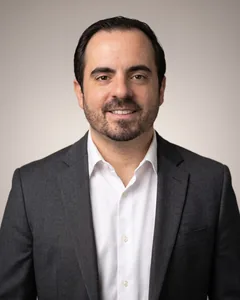
Michael Carraturo, PMHNP-BC
Psychiatric Nurse Practitioner · Ages 10 and up
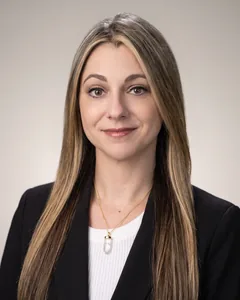
Leetal Kirshenberg, PMHNP-BC
Psychiatric Nurse Practitioner · Ages 8 and up
Signs of obsessive-compulsive disorder
- Intrusive thoughts, images or urges that feel unwanted and cause distress
- Fear of contamination, germs or illness
- Fear of harming yourself or others, or of being responsible for harm
- Unwanted sexual, violent or blasphemous thoughts
- Need for symmetry, order or things feeling 'just right'
- Excessive washing, cleaning, checking, counting or arranging
- Mental rituals such as reviewing, praying or repeating phrases
- Repeatedly seeking reassurance from others
How we diagnose it
We diagnose OCD with a structured clinical interview and the Yale-Brown Obsessive Compulsive Scale (Y-BOCS), which measures the time, distress, interference and control associated with obsessions and compulsions and is repeated to track progress. We screen for the conditions that commonly accompany or mimic OCD: depression, generalized anxiety, tic disorders, body dysmorphic disorder, hoarding, eating disorders, autism spectrum disorder and, importantly, psychosis, since insight in OCD can be poor. We take a careful history of onset, themes, family history and prior treatment including SSRI doses and duration, since many patients have had trials that were too low or too short to count. In children with abrupt onset we consider PANDAS/PANS and coordinate with pediatrics.
About 1.2 percent of US adults had OCD in the past year, and 2.3 percent will have it at some point in their lives.
Source: NIMH, National Comorbidity Survey Replication
About half of adults with OCD have serious impairment, and the average delay between symptom onset and treatment is many years.
Source: NIMH
Deep TMS for OCD received FDA clearance in 2018; in the pivotal multicenter trial, 38 percent of patients responded to active treatment versus 11 percent on sham.
Source: Carmi et al., American Journal of Psychiatry, 2019
Exposure and response prevention produces clinically significant improvement in roughly 50 to 60 percent of patients who complete treatment.
Source: American Psychiatric Association Practice Guideline for OCD
Treatment for obsessive-compulsive disorder in Boynton Beach
Medication management
SSRIs are first-line for OCD and typically need higher doses and longer trials than for depression: fluoxetine up to 80 mg, sertraline up to 200 mg, fluvoxamine up to 300 mg, escitalopram up to 40 mg, or paroxetine up to 60 mg. We increase the dose gradually and allow 10 to 12 weeks at the target dose before judging response. Clomipramine, a tricyclic, is somewhat more effective but has more side effects and is used when SSRIs fail. When response is partial, adding a low dose of an atypical antipsychotic such as aripiprazole or risperidone helps about a third of patients, particularly those with tics. Monitoring includes side effects, EKG for clomipramine, and metabolic labs for antipsychotics. Medication is usually continued for one to two years after response and tapered slowly, if at all.
Psychotherapy
Exposure and response prevention (ERP) is the most effective psychological treatment for OCD and the standard of care. You and the therapist build a ladder of feared situations, approach them deliberately, and resist the compulsion until the anxiety falls on its own. Over 12 to 20 sessions the brain learns that the feared outcome does not happen and that anxiety is tolerable. General talk therapy and reassurance do not work for OCD and can reinforce it. ERP combined with an SSRI produces the best results for moderate to severe OCD, and ERP skills reduce relapse after medication is tapered.
Interventional options
Deep TMS (BrainsWay) was FDA-cleared for OCD in 2018, the first device clearance for the condition. The H7 coil stimulates the medial prefrontal and anterior cingulate cortex, and sessions include a brief personalized symptom provocation so the circuit is active during stimulation. A standard course is 29 sessions over about six weeks, offered at our Palm Beach Gardens office. In the pivotal trial, 38 percent of patients receiving active treatment had a clinically meaningful response compared with 11 percent on sham. Deep TMS is also cleared for major depressive disorder, anxious depression and smoking cessation, which matters because many OCD patients also have depression. Spravato is FDA-approved for treatment-resistant depression and MDD with suicidal ideation in adults 18 and older, not for OCD, and is considered only when those depression criteria are met.
What to expect
Your first visit is a 60-minute evaluation that includes the Y-BOCS. If OCD is diagnosed, you leave with a plan for medication, ERP, or both, and an honest timeline. Medication follow-ups are at three to four weeks initially, then monthly as the dose increases, then every two to three months. Most follow-ups and ERP sessions can be done by telehealth from anywhere in Florida or South Carolina; ERP by video has the advantage of practicing exposures in the real environment where symptoms occur. Deep TMS requires daily weekday visits to Palm Beach Gardens for about six weeks.
The complete guide, including causes, subtypes and research, is on our Obsessive-Compulsive Disorder page.
Emergency and crisis resources near Boynton Beach
In an emergency, call 911 or go to Bethesda Hospital West Emergency Room (9655 W Boynton Beach Blvd, Boynton Beach). The 988 Suicide and Crisis Lifeline is available by call or text 24 hours a day. Bethesda Hospital East Emergency Room and 988 Suicide and Crisis Lifeline are also listed on the Boynton Beach office page.
Frequently asked questions
Who provides obsessive-compulsive disorder treatment at the Boynton Beach office?
The Boynton Beach team includes psychiatrists Dr. Peter Gobar and Ana Paula Aun, psychiatric nurse practitioners Sara Hetzler, Andres Luque, Michael Carraturo, Leetal Kirshenberg, Dara Castillo and Kayla Marzullo and physician assistant Madison Algayer. Visits in Spanish and Portuguese are available with Andres Luque and Ana Paula Aun. Every provider works under psychiatrist oversight and the same evaluation standard: about an hour for a first visit, validated screening scales, and a written plan.
Can I be seen by video instead of coming to Boynton Beach?
Yes. Stedfast Psychiatry providers are licensed in Florida and offer video visits for evaluations and follow-ups. Some situations, including certain controlled-substance prescriptions and first visits for young children, require an in-person appointment at 10301 Hagen Ranch Rd.
Does the Boynton Beach office take my insurance?
We accept most major commercial plans and Medicare. Call (561) 437-2179 with your member ID and we will verify benefits before the visit. Self-pay new-patient evaluations are $185.
How soon can a new patient be seen in Boynton Beach?
Most new patients are scheduled within one to two weeks. If you need to be seen sooner, ask about a video visit; those often open up within days. If you are in crisis, call or text 988 or go to the nearest emergency room rather than waiting.
Can I get Deep TMS or Spravato as a Boynton Beach patient?
Yes. Stedfast Psychiatry is licensed for both. Your Boynton Beach provider does the evaluation and the prior authorization; treatment sessions are scheduled at our Palm Beach Gardens TMS center and the Boynton Beach Spravato rooms (Spravato is on site here).
What is the best treatment for OCD?
Exposure and response prevention therapy is the single most effective treatment, and an SSRI at a high enough dose is the best medication. For moderate to severe OCD, the combination works better than either alone. If both have been tried properly without enough improvement, Deep TMS (FDA-cleared for OCD) or augmenting the SSRI with a low-dose antipsychotic are the next steps. We will tell you which stage you are at and what comes next.
Why does my SSRI dose for OCD seem so high?
OCD responds to higher SSRI doses than depression does, and it takes longer: 10 to 12 weeks at the target dose before we can judge response. Fluoxetine 60 to 80 mg or sertraline 150 to 200 mg are typical OCD doses. Many people who think an SSRI failed them were never on an adequate dose for long enough. These doses are safe with monitoring, and side effects usually settle after the first few weeks at each step.
Nearby Stedfast offices
If you are in crisis, call or text 988 or go to the nearest emergency room. Educational content; individual results vary. Reviewed by Dr. David Husted, board-certified psychiatrist.