Major depressive disorder is a treatable medical condition: at least two weeks of low mood or loss of interest plus changes in sleep, energy, appetite and concentration. First-line treatment is an SSRI or SNRI antidepressant, psychotherapy, or both. Most people improve within 6 to 12 weeks, and non-responders have options including Deep TMS and Spravato. Stedfast Psychiatry treats major depressive disorder at 2950 Halcyon Lane in Jacksonville and by video across Florida; new patients call (561) 330-5289.
Major Depressive Disorder at our Jacksonville office
For major depressive disorder treatment, residents of Loretto, Beauclerc, Sunbeam and Julington Creek and St. Johns, Fruit Cove, Ponte Vedra Beach and Jacksonville Beach are usually within a short drive. The office is in the Mandarin area of south Jacksonville, just off San Jose Boulevard (State Road 13) near I-295.
Free surface parking is available at the office park, with accessible spaces near the building entrance. Suite 605 is on an upper floor with elevator access. Hours are Monday to Friday, 8:00 AM to 5:00 PM, with weekend appointments by arrangement. New patients call (561) 330-5289; existing patients use (904) 302-7037.
The Jacksonville office is an entry point to Stedfast Psychiatry's Deep TMS and Spravato programs. Treatment sessions run at our Palm Beach Gardens TMS center and the Palm Beach Gardens Spravato rooms, roughly 270 and 270 minutes away; the evaluation, the screening scales and the prior authorization all happen here.

Who you will see in Jacksonville
The Jacksonville team includes psychiatrists Dr. Sandy Kaufman and Dr. Aileen Lorenzo, psychiatric nurse practitioner Natalie Black and physician assistant Carl Brescia. Visits in Spanish are available with Aileen Lorenzo. Children and teens are seen by Aileen Lorenzo.
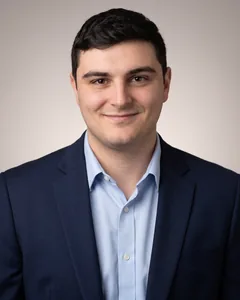
Carl Brescia, PA-C
Physician Assistant · Adults 18+
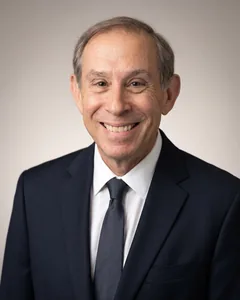
Dr. Sandy Kaufman, MD
Psychiatrist · Adults

Natalie Black, PMHNP-BC
Psychiatric Nurse Practitioner · Adults 18+
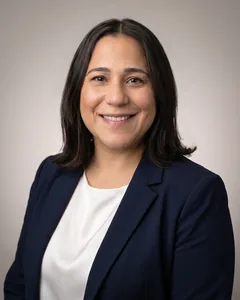
Dr. Aileen Lorenzo, MD
Psychiatrist · Ages 4 into young adulthood · English, Spanish
Signs of major depressive disorder
- Depressed mood most of the day, nearly every day
- Loss of interest or pleasure in activities you used to enjoy
- Sleeping much more or much less than usual
- Fatigue or low energy that rest does not fix
- Appetite or weight changes without trying
- Difficulty concentrating, deciding or remembering
- Feelings of worthlessness or excessive guilt
- Moving or speaking more slowly, or feeling restless
How we diagnose it
A depression evaluation at Stedfast Psychiatry starts with a structured clinical interview lasting about 45 to 60 minutes. We review the timeline of your symptoms, prior episodes, family history, sleep, substance use, medical conditions and current medications. We screen for bipolar disorder before prescribing any antidepressant, because an antidepressant given alone to someone with undiagnosed bipolar disorder can trigger mania. We use validated scales, usually the PHQ-9 for depression severity and the GAD-7 for anxiety, and repeat them at follow-ups so progress is measured rather than guessed. When the picture suggests a medical contributor, we order labs: thyroid function (TSH), complete blood count, vitamin B12 and vitamin D, and a metabolic panel. We also assess suicide risk directly at every visit, because asking does not increase risk and not asking can miss it.
An estimated 21 million US adults (8.3 percent) had at least one major depressive episode in 2021.
Source: NIMH, based on the National Survey on Drug Use and Health
In the STAR*D trial, about one third of patients reached remission on their first antidepressant, and roughly two thirds eventually remitted after up to four treatment steps.
Source: STAR*D, National Institute of Mental Health
Depression is a leading cause of disability worldwide, affecting an estimated 5 percent of adults.
Source: World Health Organization
Combining psychotherapy with antidepressant medication is more effective than either treatment alone for moderate to severe depression.
Source: American Psychiatric Association Practice Guideline
Treatment for major depressive disorder in Jacksonville
Medication management
First-line antidepressants are SSRIs such as sertraline, escitalopram and fluoxetine, and SNRIs such as venlafaxine and duloxetine. Bupropion is a good option when fatigue, low motivation or sexual side effects are concerns, and mirtazapine helps when insomnia and poor appetite dominate. We start at a low dose, increase over two to four weeks, and expect early improvement in sleep and energy by week two to three with full mood response by week six to eight. If a medication has not helped at an adequate dose for six to eight weeks, we switch or augment rather than wait. Augmentation options include adding bupropion, a low-dose atypical antipsychotic such as aripiprazole, or lithium. We monitor side effects, blood pressure for SNRIs, and ask about activation or suicidal thoughts in the first weeks, especially in patients under 25.
Psychotherapy
Cognitive behavioral therapy (CBT) and behavioral activation have the strongest evidence for depression and work about as well as medication for mild to moderate episodes. For moderate to severe depression, the combination of medication and therapy outperforms either alone. Interpersonal therapy helps when depression is tied to a role change, conflict or loss. Our therapists coordinate directly with the prescriber so your care is one plan rather than two.
Interventional options
If two or more antidepressant trials have not produced remission, you may be a candidate for Deep TMS or Spravato. Deep TMS (BrainsWay) is FDA-cleared for major depressive disorder (2013) and for anxious depression (2021). It uses magnetic pulses to stimulate the prefrontal cortex, requires no anesthesia, and a typical course is 36 sessions over six to nine weeks at our Palm Beach Gardens office. Spravato (esketamine) nasal spray is FDA-approved for treatment-resistant depression (2019) and for depressive symptoms in adults with major depressive disorder with acute suicidal ideation or behavior (2020), for adults 18 and older. It is taken in our office under the REMS program with two hours of monitoring, twice weekly for four weeks during induction and then weekly or every other week. Both are covered by most commercial insurance and Medicare when criteria are met.
What to expect
Your first visit is a full psychiatric evaluation, in person or by video. You leave with a diagnosis, a written plan and, when appropriate, a prescription sent to your pharmacy. Follow-ups are scheduled at two to four weeks while we adjust medication, then every one to three months once you are stable. Most follow-ups can be done by telehealth from anywhere in Florida or South Carolina, which makes it easier to stay consistent. We track your PHQ-9 at each visit and treat to remission, not just improvement.
The complete guide, including causes, subtypes and research, is on our Major Depressive Disorder page.
Emergency and crisis resources near Jacksonville
In an emergency, call 911 or go to Baptist Medical Center South Emergency Room (14550 Old St Augustine Rd, Jacksonville). The 988 Suicide and Crisis Lifeline is available by call or text 24 hours a day. HCA Florida Memorial Hospital Emergency Room and 988 Suicide and Crisis Lifeline are also listed on the Jacksonville office page.
Frequently asked questions
Who provides major depressive disorder treatment at the Jacksonville office?
The Jacksonville team includes psychiatrists Dr. Sandy Kaufman and Dr. Aileen Lorenzo, psychiatric nurse practitioner Natalie Black and physician assistant Carl Brescia. Visits in Spanish are available with Aileen Lorenzo. Every provider works under psychiatrist oversight and the same evaluation standard: about an hour for a first visit, validated screening scales, and a written plan.
Can I be seen by video instead of coming to Jacksonville?
Yes. Stedfast Psychiatry providers are licensed in Florida and offer video visits for evaluations and follow-ups. Some situations, including certain controlled-substance prescriptions and first visits for young children, require an in-person appointment at 2950 Halcyon Lane.
Does the Jacksonville office take my insurance?
We accept most major commercial plans and Medicare. Call (561) 330-5289 with your member ID and we will verify benefits before the visit. Self-pay new-patient evaluations are $185.
How soon can a new patient be seen in Jacksonville?
Most new patients are scheduled within one to two weeks. If you need to be seen sooner, ask about a video visit; those often open up within days. If you are in crisis, call or text 988 or go to the nearest emergency room rather than waiting.
Can I get Deep TMS or Spravato as a Jacksonville patient?
Yes. Stedfast Psychiatry is licensed for both. Your Jacksonville provider does the evaluation and the prior authorization; treatment sessions are scheduled at our Palm Beach Gardens TMS center and the Palm Beach Gardens Spravato rooms.
How do I know if I have depression or am just going through a hard time?
Sadness after a loss or setback is normal and usually lifts as the situation changes. Depression is different in duration and reach: symptoms last at least two weeks, show up nearly every day, and spread into sleep, energy, appetite, concentration and self-worth. If you cannot point to a reason for how bad you feel, or the reason has resolved and the feeling has not, it is worth an evaluation. A short screening with the PHQ-9 takes two minutes and gives a clear starting point.
Medication or therapy: which is better for depression?
For mild to moderate depression they work about equally well, and the right choice depends on your preference, history and access. For moderate to severe depression, the combination is better than either alone. Medication tends to work faster on sleep, energy and appetite; therapy builds skills that lower relapse risk after treatment ends. Many patients start both and taper one later.
Nearby Stedfast offices
If you are in crisis, call or text 988 or go to the nearest emergency room. Educational content; individual results vary. Reviewed by Dr. David Husted, board-certified psychiatrist.