Generalized anxiety disorder is chronic, excessive worry lasting six months or more with physical symptoms such as tension, restlessness and poor sleep. It is treated with SSRIs or SNRIs, cognitive behavioral therapy, or both, with buspirone and hydroxyzine as alternatives. Most people improve substantially within 8 to 12 weeks, and treatment is available in person or by telehealth. Stedfast Psychiatry treats generalized anxiety disorder at 11641 Kew Gardens Ave in Palm Beach Gardens and by video across Florida; new patients call (561) 437-2199.
Generalized Anxiety Disorder at our Palm Beach Gardens office
If you live near The Gardens Mall or in Mirasol, Frenchman's Creek, Frenchman's Reserve and Evergrene, this is your closest Stedfast Psychiatry office for generalized anxiety disorder treatment. We also see residents of Juno Beach, Jupiter, Lake Park and Riviera Beach who prefer not to drive farther.
Free surface parking is available at the building, including accessible spaces near the main entrance. The lot is shared with other medical and professional offices, so arrive a few minutes early for your first visit. Patients coming for Deep TMS or Spravato sessions can park in the same lot. Hours are Monday to Friday, 8:00 AM to 5:00 PM, with weekend appointments by arrangement. New patients call (561) 437-2199; existing patients use (561) 402-3971.
Both Deep TMS and Spravato are delivered on site at this office, so a patient who does not respond to medication can move to an interventional option without changing clinics.

Who you will see in Palm Beach Gardens
The Palm Beach Gardens team includes psychiatrists Dr. Louis Velazquez and Dr. Tanya Peguero Estevez, psychiatric nurse practitioner Sophia Schulman and physician assistant Ellington Curtis. Visits in Spanish are available with Tanya Peguero Estevez. Children and teens are seen by Louis Velazquez, Sophia Schulman, Ellington Curtis and Stephanie Mills.

Dr. Louis Velazquez, MD
Psychiatrist · Ages 4 to 80
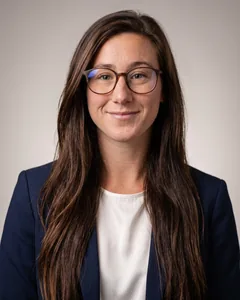
Sophia Schulman, PMHNP-BC
Psychiatric Nurse Practitioner · Children 7+, adolescents and adults
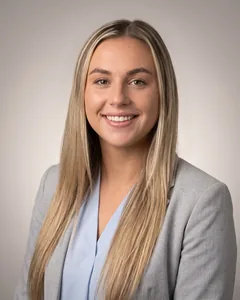
Ellington Curtis, PA-C
Physician Assistant · Adults and teens 14+
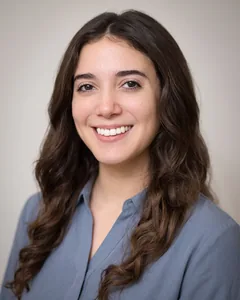
Dr. Tanya Peguero Estevez, MD
Psychiatrist · Adults 18+ · English, Spanish
Stephanie Mills
Clinician · Adults and teens 13+
Signs of generalized anxiety disorder
- Excessive worry about several things most days for at least six months
- Difficulty controlling or stopping the worry
- Restlessness or feeling keyed up and on edge
- Muscle tension, headaches or jaw clenching
- Fatigue that is out of proportion to activity
- Trouble concentrating or mind going blank
- Irritability
- Trouble falling or staying asleep
How we diagnose it
We diagnose GAD through a structured psychiatric interview that maps what you worry about, how long it has been going on, how much control you have over it, and the physical symptoms that come with it. We use the GAD-7 scale at the first visit and every follow-up to track severity. Because anxiety rarely travels alone, we screen for depression (PHQ-9), panic attacks, social anxiety, OCD, PTSD and ADHD, each of which changes the treatment plan. We review caffeine, alcohol, cannabis and stimulant use and all current medications. When indicated we order thyroid function tests, a complete blood count and a metabolic panel, and we may ask your primary care provider for an EKG if palpitations are a prominent symptom.
Generalized anxiety disorder affects an estimated 2.7 percent of US adults in a given year and 5.7 percent at some point in their lives.
Source: NIMH, National Comorbidity Survey Replication
Anxiety disorders as a group are the most common mental illness in the US, affecting 19.1 percent of adults each year.
Source: NIMH
Women are about twice as likely as men to be diagnosed with GAD.
Source: American Psychiatric Association, DSM-5-TR
Cognitive behavioral therapy produces clinically meaningful improvement in roughly half to two thirds of GAD patients, comparable to medication.
Source: Meta-analyses summarized by the American Psychological Association
Treatment for generalized anxiety disorder in Palm Beach Gardens
Medication management
SSRIs (escitalopram, sertraline, paroxetine) and SNRIs (venlafaxine XR, duloxetine) are first-line for GAD and are FDA-approved for it. We start low because people with anxiety are sensitive to early side effects, and increase over two to four weeks. Physical symptoms and sleep often improve first; the worry itself usually eases by week four to eight, with full effect by twelve weeks. Buspirone is a non-sedating option that can be used alone or added to an SSRI. Hydroxyzine helps with short-term relief and sleep without dependence. Benzodiazepines such as lorazepam or clonazepam work quickly but carry tolerance and dependence risk, so we use them sparingly, for short periods or for a bridge while an SSRI takes effect. We monitor blood pressure on SNRIs and check in on side effects at two and six weeks.
Psychotherapy
Cognitive behavioral therapy for GAD targets intolerance of uncertainty, worry as a (false) problem-solving strategy, and avoidance. Typical treatment is 12 to 16 weekly sessions. Techniques include worry scheduling, cognitive restructuring, applied relaxation, and exposure to uncertainty. Acceptance and commitment therapy and mindfulness-based approaches also have good evidence. For many patients, therapy alone is sufficient; for moderate to severe GAD, combining it with medication produces the best and most durable results.
What to expect
At your first appointment, in person or by video, you will complete the GAD-7 and PHQ-9, then spend 45 to 60 minutes with a psychiatric provider reviewing your history and symptoms. You leave with a diagnosis, a plan, and a prescription if medication is part of it. Follow-ups are at two to four weeks during dose adjustment, then every two to three months. Telehealth works well for GAD and most patients do the majority of their follow-ups by video from home or work anywhere in Florida or South Carolina.
The complete guide, including causes, subtypes and research, is on our Generalized Anxiety Disorder page.
Emergency and crisis resources near Palm Beach Gardens
In an emergency, call 911 or go to Palm Beach Gardens Medical Center Emergency Room (3360 Burns Rd, Palm Beach Gardens). The 988 Suicide and Crisis Lifeline is available by call or text 24 hours a day. Jupiter Medical Center Emergency Department and 988 Suicide and Crisis Lifeline are also listed on the Palm Beach Gardens office page.
Frequently asked questions
Who provides generalized anxiety disorder treatment at the Palm Beach Gardens office?
The Palm Beach Gardens team includes psychiatrists Dr. Louis Velazquez and Dr. Tanya Peguero Estevez, psychiatric nurse practitioner Sophia Schulman and physician assistant Ellington Curtis. Visits in Spanish are available with Tanya Peguero Estevez. Every provider works under psychiatrist oversight and the same evaluation standard: about an hour for a first visit, validated screening scales, and a written plan.
Can I be seen by video instead of coming to Palm Beach Gardens?
Yes. Stedfast Psychiatry providers are licensed in Florida and offer video visits for evaluations and follow-ups. Some situations, including certain controlled-substance prescriptions and first visits for young children, require an in-person appointment at 11641 Kew Gardens Ave.
Does the Palm Beach Gardens office take my insurance?
We accept most major commercial plans and Medicare. Call (561) 437-2199 with your member ID and we will verify benefits before the visit. Self-pay new-patient evaluations are $185.
How soon can a new patient be seen in Palm Beach Gardens?
Most new patients are scheduled within one to two weeks. If you need to be seen sooner, ask about a video visit; those often open up within days. If you are in crisis, call or text 988 or go to the nearest emergency room rather than waiting.
Can I get Deep TMS or Spravato as a Palm Beach Gardens patient?
Yes. Deep TMS is delivered on site in Palm Beach Gardens. Spravato is available at Palm Beach Gardens, Palm Beach Gardens and Royal Palm Beach.
What is the best medication for generalized anxiety disorder?
There is no single best medication, but escitalopram, sertraline, venlafaxine XR and duloxetine are the most commonly used first-line options and have the strongest evidence. Buspirone is a good non-sedating alternative or add-on. Hydroxyzine can be used as needed. The right choice depends on your other symptoms, side-effect sensitivity, other medications and whether depression is also present. We expect to find the right fit within one or two trials.
Are benzodiazepines like Xanax a good treatment for GAD?
They relieve anxiety within an hour, which is why patients like them, but they lose effect with daily use, cause dependence, impair memory and driving, and are dangerous combined with alcohol or opioids. We use them for short-term relief, for a few weeks while an SSRI starts working, or occasionally for specific situations. They are not a long-term treatment for GAD, and telehealth prescribing of controlled substances has additional requirements.
Nearby Stedfast offices
If you are in crisis, call or text 988 or go to the nearest emergency room. Educational content; individual results vary. Reviewed by Dr. David Husted, board-certified psychiatrist.