Autism spectrum disorder is a lifelong neurodevelopmental difference in social communication and in patterns of behavior, interests and sensory processing. Diagnosis in teens and adults is based on a structured clinical assessment and developmental history. There is no medication for autism itself; psychiatric care focuses on co-occurring anxiety, depression, ADHD and irritability, with therapy, accommodations and support. Stedfast Psychiatry treats autism spectrum disorder at 729 SW Federal Hwy in Stuart and by video across Florida; new patients call (561) 257-3099.
Autism Spectrum Disorder in Teens and Adults at our Stuart office
If you live near Cleveland Clinic Martin North Hospital or in Rio, Sewall's Point, Port Salerno and Hutchinson Island, this is your closest Stedfast Psychiatry office for autism spectrum disorder treatment. We also see residents of Jensen Beach, Port Salerno, Hobe Sound and Sewall's Point who prefer not to drive farther.
Call (561) 257-3099 to book, or request an appointment online and we will call you back. The office is open weekdays 8:00 AM to 5:00 PM. The office is on US-1 (SW Federal Highway) on the south side of Stuart, a few minutes from downtown and the Roosevelt Bridge. From I-95, take exit 101 for State Road 76 (Kanner Highway) and head east toward downtown Stuart for about five miles, then turn south onto US-1.
The Stuart office is an entry point to Stedfast Psychiatry's Deep TMS and Spravato programs. Treatment sessions run at our Palm Beach Gardens TMS center and the Palm Beach Gardens Spravato rooms, roughly 40 and 40 minutes away; the evaluation, the screening scales and the prior authorization all happen here.

Who you will see in Stuart
The Stuart team includes psychiatric nurse practitioners Jienne Torres and Maria Ramos and physician assistant Alacia Sims. Visits in Spanish are available with Jienne Torres. Children and teens are seen by Alacia Sims and Jienne Torres.
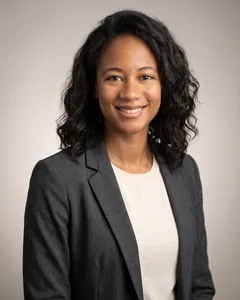
Alacia Sims, PA-C
Physician Assistant · Adults and teens 15+
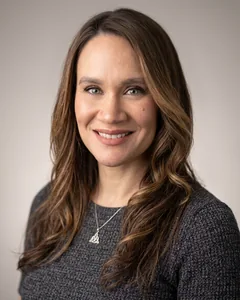
Jienne Torres, PMHNP-BC
Psychiatric Nurse Practitioner · Children 5+, adolescents and adults · English, Spanish
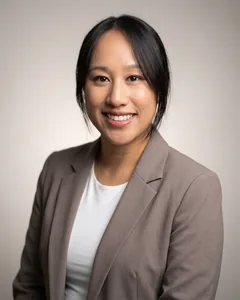
Maria Ramos, PMHNP-BC
Psychiatric Nurse Practitioner · Ages 12 and up
Signs of autism spectrum disorder
- Difficulty with back-and-forth conversation or reading social cues
- Finding eye contact, small talk or group settings draining or confusing
- Feeling like you are performing or 'masking' in social situations
- Preferring routine and finding unexpected changes very distressing
- Deep, focused interests pursued with unusual intensity
- Sensory sensitivities to sound, light, textures, smells or touch
- Repetitive movements or self-soothing behaviors such as rocking or hand movements
- Taking language literally or difficulty with sarcasm and implied meaning
How we diagnose it
Diagnosing autism in a teenager or adult requires a careful clinical assessment. We take a developmental history going back to early childhood, with input from a parent or someone who knew you as a child when possible, and a detailed account of current social communication, routines, interests, sensory experiences and masking. We use standardized tools including the Autism Spectrum Quotient (AQ) and the RAADS-R for adults, and when a formal observational measure is needed we use or refer for the ADOS-2. We screen for ADHD, anxiety, depression, OCD, social anxiety and trauma, which both co-occur with autism and can be confused with it, and we distinguish autism from social anxiety disorder, schizoid traits and personality disorders. For adults seeking workplace or academic accommodations, or for complex presentations, we coordinate with neuropsychologists for comprehensive testing.
About 1 in 31 US children aged 8 was identified with autism spectrum disorder in 2022, up from 1 in 150 in 2000.
Source: CDC, Autism and Developmental Disabilities Monitoring Network
An estimated 2.2 percent of US adults, about 5.4 million people, are autistic, and most adults were never formally diagnosed.
Source: CDC, Journal of Autism and Developmental Disorders, 2020
Anxiety disorders affect roughly 40 percent of autistic adults, and depression affects 20 to 40 percent, far above general population rates.
Source: Meta-analyses, Lancet Psychiatry 2019 (Lai et al.)
Autism is diagnosed about 3 to 4 times more often in boys than girls, and girls and women are diagnosed later on average, partly because of masking.
Source: CDC; American Psychiatric Association, DSM-5-TR
Treatment for autism spectrum disorder in Stuart
Medication management
No medication treats autism itself, and we do not prescribe to make someone less autistic. Medication targets co-occurring conditions and specific symptoms. SSRIs such as sertraline or escitalopram treat the anxiety and depression that affect the majority of autistic adults, started at low doses because sensitivity to side effects is common. Stimulants or non-stimulants (atomoxetine, guanfacine) treat co-occurring ADHD, which affects 30 to 50 percent of autistic people, with guanfacine also helping irritability and sleep. Risperidone and aripiprazole are FDA-approved for irritability associated with autism in children and adolescents and are used cautiously with metabolic monitoring when severe irritability or self-injury is present. Melatonin helps the sleep-onset problems that are nearly universal in autism. We avoid unnecessary polypharmacy and review every medication regularly.
Psychotherapy and support
Cognitive behavioral therapy adapted for autism, with concrete language, visual supports and attention to sensory factors, is effective for anxiety and depression in autistic teens and adults. Therapy also helps with understanding the diagnosis, reducing the cost of masking, building self-advocacy, managing burnout and navigating relationships and employment. Social skills groups benefit some teens. Occupational therapy addresses sensory needs. We connect patients with autism-affirming therapists, vocational rehabilitation services, support groups and, for students, disability services offices for accommodations under Section 504, an IEP or the ADA.
What to expect
The diagnostic evaluation is typically 90 minutes, sometimes across two visits, in person or by video, and we will ask you to complete questionnaires beforehand and, if possible, to have a parent or long-time partner share observations. You receive a written summary of the diagnosis, suitable for accommodation requests. For ongoing care, follow-ups are every one to three months depending on medication needs. Telehealth is available across Florida and South Carolina and many autistic patients prefer it, since it removes travel, waiting rooms and sensory load.
The complete guide, including causes, subtypes and research, is on our Autism Spectrum Disorder in Teens and Adults page.
Emergency and crisis resources near Stuart
In an emergency, call 911 or go to Cleveland Clinic Martin North Hospital Emergency Department (200 SE Hospital Ave, Stuart). The 988 Suicide and Crisis Lifeline is available by call or text 24 hours a day. Cleveland Clinic Martin South Hospital Emergency Department and 988 Suicide and Crisis Lifeline are also listed on the Stuart office page.
Frequently asked questions
Who provides autism spectrum disorder treatment at the Stuart office?
The Stuart team includes psychiatric nurse practitioners Jienne Torres and Maria Ramos and physician assistant Alacia Sims. Visits in Spanish are available with Jienne Torres. Every provider works under psychiatrist oversight and the same evaluation standard: about an hour for a first visit, validated screening scales, and a written plan.
Can I be seen by video instead of coming to Stuart?
Yes. Stedfast Psychiatry providers are licensed in Florida and offer video visits for evaluations and follow-ups. Some situations, including certain controlled-substance prescriptions and first visits for young children, require an in-person appointment at 729 SW Federal Hwy.
Does the Stuart office take my insurance?
We accept most major commercial plans and Medicare. Call (561) 257-3099 with your member ID and we will verify benefits before the visit. Self-pay new-patient evaluations are $185.
How soon can a new patient be seen in Stuart?
Most new patients are scheduled within one to two weeks. If you need to be seen sooner, ask about a video visit; those often open up within days. If you are in crisis, call or text 988 or go to the nearest emergency room rather than waiting.
Can I get Deep TMS or Spravato as a Stuart patient?
Yes. Stedfast Psychiatry is licensed for both. Your Stuart provider does the evaluation and the prior authorization; treatment sessions are scheduled at our Palm Beach Gardens TMS center and the Palm Beach Gardens Spravato rooms.
Can adults be diagnosed with autism?
Yes. Many adults, especially women and people who learned to mask, were never evaluated as children, and a diagnosis in adulthood is common and valid. The evaluation uses your developmental history, current experiences, standardized questionnaires and clinical observation. Adults seek diagnosis for self-understanding, to explain why anxiety or depression treatment has not fully worked, to access workplace or academic accommodations, or after a child's diagnosis. We provide written documentation.
Is there medication for autism?
No medication treats autism itself, and we would not want one that did. Medication treats the conditions that often come with autism and cause real distress: SSRIs for anxiety and depression, stimulants or non-stimulants for ADHD, melatonin for sleep, and in some cases low-dose aripiprazole or risperidone for severe irritability. We start low, go slow, and avoid stacking medications, because autistic people are often sensitive to side effects.
Nearby Stedfast offices
If you are in crisis, call or text 988 or go to the nearest emergency room. Educational content; individual results vary. Reviewed by Dr. David Husted, board-certified psychiatrist.