Bipolar disorder causes episodes of mania or hypomania and depression. It is treated with mood stabilizers (lithium, lamotrigine, valproate) and certain atypical antipsychotics (quetiapine, lurasidone, cariprazine), combined with psychotherapy and attention to sleep. Antidepressants alone are avoided. With consistent treatment most people achieve long stretches of stability. Stedfast Psychiatry treats bipolar disorder at 729 SW Federal Hwy in Stuart and by video across Florida; new patients call (561) 257-3099.
Bipolar Disorder at our Stuart office
If you live near Cleveland Clinic Martin North Hospital or in Rio, Sewall's Point, Port Salerno and Hutchinson Island, this is your closest Stedfast Psychiatry office for bipolar disorder treatment. We also see residents of Jensen Beach, Port Salerno, Hobe Sound and Sewall's Point who prefer not to drive farther.
Free parking is available in the surface lot in front of the building, with accessible spaces close to the entrance. The suite is on the ground floor. Street parking on Federal Highway is not recommended. Hours are Monday to Friday, 8:00 AM to 5:00 PM, with weekend appointments by arrangement. New patients call (561) 257-3099; existing patients use (772) 226-8265.
The Stuart office is an entry point to Stedfast Psychiatry's Deep TMS and Spravato programs. Treatment sessions run at our Palm Beach Gardens TMS center and the Palm Beach Gardens Spravato rooms, roughly 40 and 40 minutes away; the evaluation, the screening scales and the prior authorization all happen here.

Who you will see in Stuart
The Stuart team includes psychiatric nurse practitioners Jienne Torres and Maria Ramos and physician assistant Alacia Sims. Visits in Spanish are available with Jienne Torres. Children and teens are seen by Alacia Sims and Jienne Torres.

Alacia Sims, PA-C
Physician Assistant · Adults and teens 15+
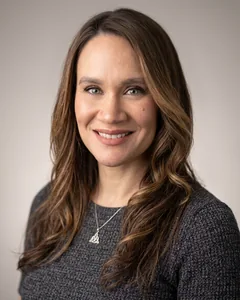
Jienne Torres, PMHNP-BC
Psychiatric Nurse Practitioner · Children 5+, adolescents and adults · English, Spanish

Maria Ramos, PMHNP-BC
Psychiatric Nurse Practitioner · Ages 12 and up
Signs of bipolar disorder
- Periods of unusually elevated, expansive or irritable mood lasting days to weeks
- Needing much less sleep without feeling tired
- Racing thoughts and rapid, pressured speech
- Grandiose ideas or inflated confidence
- Impulsive spending, sexual behavior, driving or business decisions
- Increased activity, starting many projects at once
- Episodes of deep depression with low energy and hopelessness
- Depressive episodes that start early in life and recur often
How we diagnose it
Diagnosing bipolar disorder requires a careful history of mood episodes over the whole lifespan, not just the current symptoms. We ask in detail about any period of decreased need for sleep with increased energy, because that is the most reliable marker of past hypomania or mania. We use the Mood Disorder Questionnaire as a screen and the PHQ-9 and Young Mania Rating Scale to track severity. Family history, age of onset, number of past depressive episodes, response to prior antidepressants and substance use all inform the diagnosis. Input from a family member is valuable because people rarely recognize their own hypomania. Before starting medication we order baseline labs: a metabolic panel, thyroid function, kidney function, complete blood count, and for some medications a pregnancy test and lipid panel. Medical mimics such as hyperthyroidism, steroid use and stimulant intoxication are ruled out.
An estimated 2.8 percent of US adults had bipolar disorder in the past year, and 4.4 percent will have it at some point in their lives.
Source: NIMH, National Comorbidity Survey Replication
About 83 percent of people with bipolar disorder have serious impairment, the highest rate of any mood disorder.
Source: NIMH
People with bipolar disorder spend roughly three times as many weeks depressed as manic or hypomanic.
Source: NIMH Collaborative Depression Study (Judd et al., 2002)
Long-term lithium treatment is associated with a significantly reduced risk of suicide in people with mood disorders.
Source: Meta-analysis, BMJ 2013 (Cipriani et al.)
Treatment for bipolar disorder in Stuart
Medication management
Mood stabilizers are the foundation. Lithium remains the best-studied medication for bipolar I, reduces suicide risk, and requires blood level monitoring (every one to two weeks at the start, then every three to six months) along with kidney and thyroid checks. Lamotrigine is effective for preventing bipolar depression and has few metabolic side effects, but must be started slowly over six weeks to reduce the risk of a serious rash. Valproate works well for acute mania and mixed states. Atypical antipsychotics with evidence for bipolar depression include quetiapine, lurasidone, cariprazine and lumateperone; for mania, aripiprazole, risperidone, olanzapine and others are used. We monitor weight, glucose, lipids and movement side effects on antipsychotics. Antidepressants are used cautiously, if at all, and only in combination with a mood stabilizer. Acute episodes typically settle in two to six weeks; maintenance treatment continues long term because relapse without medication is very likely.
Psychotherapy
Psychoeducation about the illness, early warning signs and the role of sleep is the most protective thing we can offer after medication. Interpersonal and social rhythm therapy stabilizes daily routines, which stabilizes mood. CBT and family-focused therapy reduce relapse and help with the depressive side. Therapy also addresses the common companions of bipolar disorder: anxiety, substance use and the damage past episodes may have done to relationships, finances and work.
Interventional options
Deep TMS is FDA-cleared for major depressive disorder, OCD, anxious depression and smoking cessation; it is not FDA-cleared for bipolar depression, and we discuss it only as an off-label consideration in specific cases with the risk of switching to mania in mind. Spravato is FDA-approved for treatment-resistant depression and MDD with suicidal ideation in adults, not for bipolar disorder, and its trials excluded bipolar patients. For severe or treatment-resistant bipolar depression and for severe mania, electroconvulsive therapy remains the most effective option and we coordinate referrals when it is needed.
What to expect
Your first visit is a thorough 60-minute evaluation, in person or by video, often with a family member if you agree. If the diagnosis is bipolar disorder, you leave with a medication plan, lab orders and a safety plan. Follow-ups are at one to two weeks early on, especially when lithium or lamotrigine is being titrated, then monthly, then every two to three months once stable. Telehealth follow-ups are available in Florida and South Carolina; lab draws can be done at a local lab near you.
The complete guide, including causes, subtypes and research, is on our Bipolar Disorder page.
Emergency and crisis resources near Stuart
In an emergency, call 911 or go to Cleveland Clinic Martin North Hospital Emergency Department (200 SE Hospital Ave, Stuart). The 988 Suicide and Crisis Lifeline is available by call or text 24 hours a day. Cleveland Clinic Martin South Hospital Emergency Department and 988 Suicide and Crisis Lifeline are also listed on the Stuart office page.
Frequently asked questions
Who provides bipolar disorder treatment at the Stuart office?
The Stuart team includes psychiatric nurse practitioners Jienne Torres and Maria Ramos and physician assistant Alacia Sims. Visits in Spanish are available with Jienne Torres. Every provider works under psychiatrist oversight and the same evaluation standard: about an hour for a first visit, validated screening scales, and a written plan.
Can I be seen by video instead of coming to Stuart?
Yes. Stedfast Psychiatry providers are licensed in Florida and offer video visits for evaluations and follow-ups. Some situations, including certain controlled-substance prescriptions and first visits for young children, require an in-person appointment at 729 SW Federal Hwy.
Does the Stuart office take my insurance?
We accept most major commercial plans and Medicare. Call (561) 257-3099 with your member ID and we will verify benefits before the visit. Self-pay new-patient evaluations are $185.
How soon can a new patient be seen in Stuart?
Most new patients are scheduled within one to two weeks. If you need to be seen sooner, ask about a video visit; those often open up within days. If you are in crisis, call or text 988 or go to the nearest emergency room rather than waiting.
Can I get Deep TMS or Spravato as a Stuart patient?
Yes. Stedfast Psychiatry is licensed for both. Your Stuart provider does the evaluation and the prior authorization; treatment sessions are scheduled at our Palm Beach Gardens TMS center and the Palm Beach Gardens Spravato rooms.
What is the difference between bipolar I and bipolar II?
Bipolar I requires at least one full manic episode: a week or more of elevated or irritable mood with marked impairment, often requiring hospitalization, sometimes with psychosis. Bipolar II involves hypomania, which is shorter and less severe and does not cause major impairment, plus at least one major depressive episode. Bipolar II is not milder overall; the depressions are often longer and more disabling, and the risk of misdiagnosis as unipolar depression is higher.
Why can antidepressants be a problem in bipolar disorder?
An antidepressant taken without a mood stabilizer can trigger mania or hypomania, speed up cycling, or produce an agitated mixed state in someone with bipolar disorder. It can also simply fail to work. That is why we screen every depressed patient for past hypomania before prescribing. When an antidepressant is used in bipolar disorder, it is added to a mood stabilizer and watched closely.
Nearby Stedfast offices
If you are in crisis, call or text 988 or go to the nearest emergency room. Educational content; individual results vary. Reviewed by Dr. David Husted, board-certified psychiatrist.